4 min read
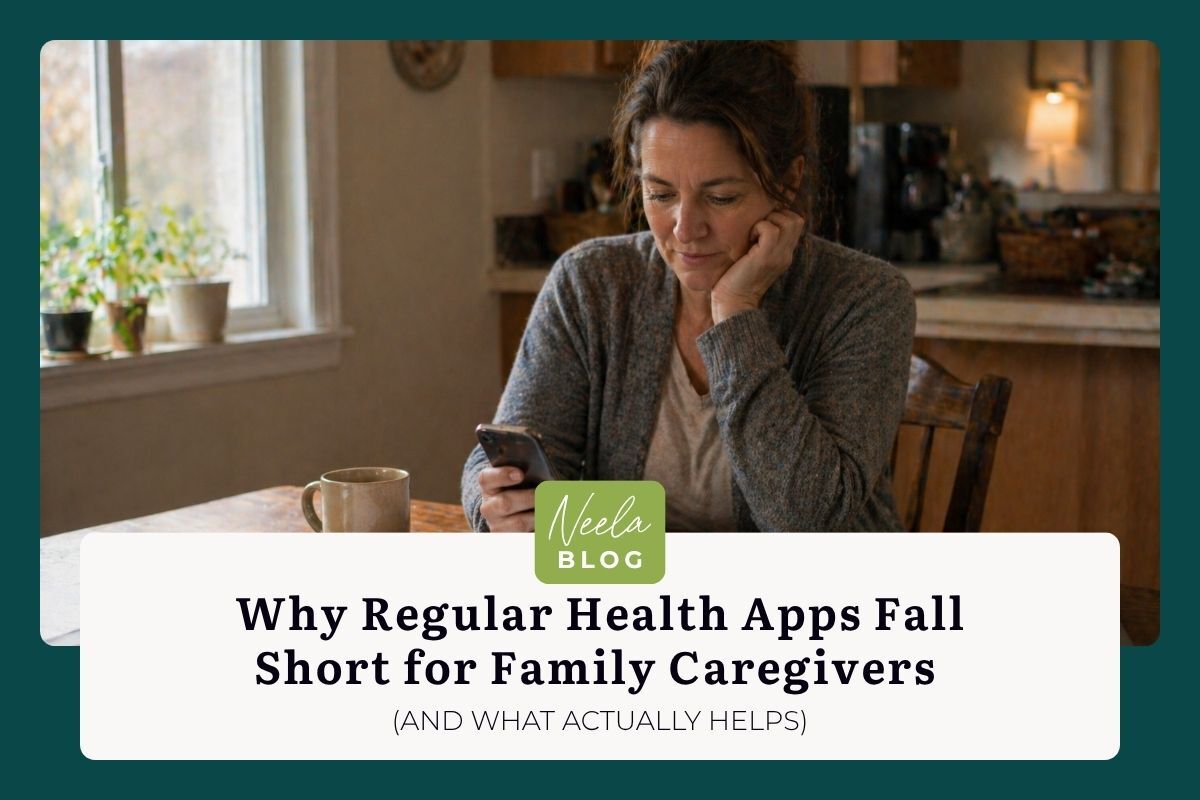
Why Regular Health Apps Fall Short for Family Caregivers (And What Actually Helps)
Alexis Villazon : May 6, 2026
If you have ever opened a regular health app to manage your parent's medications, your spouse's symptoms, or a child's specialist visits, and felt like the app was built for someone else, you are right. It was. Most consumer health apps track steps, sleep, and weight for one user. Family caregivers track multiple medications across one or more loved ones, capture doctor visit instructions, store insurance documents, and answer medical questions in the moment. The mismatch is structural, not accidental. Here is why it shows up the way it does, and what actually works instead.
Why family caregivers struggle with medical information apps
Most health apps are designed for the patient, the person whose body is being tracked. Family caregivers are not that person. They are the second user, often the more active one, managing care from outside the patient's account.
This shows up in three specific ways.
Single-account assumptions. Most health apps tie data to one user profile. A daughter caring for her father ends up either logging into his accounts (often a privacy and security workaround) or maintaining separate notes somewhere else.
Generic answers that ignore context. Search a medication question in a regular health app or in Google, and the answer applies to a hypothetical patient. It does not know about your loved one's other prescriptions, allergies, or recent labs. The information is technically correct and practically useless.
Storage without retrieval. Many apps let caregivers upload documents. Very few let them ask questions about those documents later. A 30-page hospital discharge summary in PDF form is not a useful answer at 11pm on a Tuesday.
The result: most family caregivers end up with a patchwork of Notes apps, screenshots, photo libraries, group texts, and one binder somewhere with the important originals.
What makes it hard to track symptoms with regular health apps
Symptom tracking sounds simple. In practice it is one of the hardest jobs a family caregiver does, and regular health apps make it harder for four reasons.
Symptoms are messy. Real-world symptoms include dizziness, mood shifts, sleep disruption, swelling, appetite changes, and side effects from a new medication. Most consumer health apps offer a fixed set of quantitative metrics (steps, heart rate, weight) and do not capture the qualitative information that doctors actually ask about during a visit.
Patterns matter more than data points. A single dizzy spell on a Tuesday is not useful. Three dizzy spells in two weeks, all in the morning, after a medication change, is useful. Most regular apps log entries but do not surface patterns over time.
Multiple observers, one truth. Symptoms get noticed by whoever is around. A spouse, an adult child, a hired caregiver, a sibling visiting on the weekend. If each person logs to a different place, no one has the full picture.
Recall is unreliable. By the time a caregiver gets to the doctor's office, the details of a symptom from three weeks ago are fuzzy. Apps that do not make it fast and easy to capture in the moment lose the data altogether.
How caregiving apps help remember what doctors say
The 15-minute appointment is one of the highest-stakes information events in caregiving. The doctor explains a diagnosis, names a new medication, adjusts a dose, recommends a follow-up, and orders three tests. The caregiver is supposed to absorb all of it while also being emotionally present for the loved one in the room.
Caregiving-specific apps are starting to solve this in two ways.
AI scribes. A growing category of caregiving apps now includes a recording feature that captures the appointment audio, transcribes it, and produces a structured summary with medications, recommendations, and follow-up actions. The caregiver can put the phone down and actually listen.
Searchable history. Once visit summaries are stored together, they become searchable later. The question "what did the cardiologist say about the new dose?" is answerable in seconds rather than requiring a flip through three weeks of paper notes and screenshots.
This is where the gap between regular health apps and caregiving-specific apps shows up most clearly. Neela Cares, for example, includes Scribe for capturing appointments and a Vault that stores all care documents in one searchable place. The combination matters more than either feature alone, because remembering what was said is only useful if a caregiver can find it again later.
What actually helps
Three things separate apps that work for family caregivers from apps that do not.
Built around the caregiver, not just the patient. Look for apps that assume more than one person is involved in care. Family sharing, role-based access, and visibility for siblings or hired help should be defaults, not afterthoughts.
AI grounded in the loved one's actual records. Generic chatbots are easy to find. AI that answers questions using a specific person's medications, diagnoses, and history is rarer and far more useful. This is what removes the late-night Google rabbit hole.
Capture in the moment, retrieve on demand. Family caregivers do not have time to type up structured notes after a visit. Voice capture, document upload, and AI summarization shift the work from the caregiver to the app.
The right tool will not solve everything. But it can quietly carry the parts of caregiving that should not have to live in your head.
For a side-by-side comparison of apps built specifically for family caregivers, including Neela Cares, Caring Village, CaringBridge, ianacare, and others, see Top AI Caregiving Apps for Busy US Families.
Frequently Asked Questions
Why do family caregivers struggle with medical information apps?
Most health apps are designed for the patient, not the family caregiver. They tie data to one user account, give generic answers that ignore the loved one's specific medical history, and let documents pile up without making them searchable. Family caregivers end up managing care across Notes apps, screenshots, group texts, and paper folders because no single tool was built to handle the full job.
What makes it hard to track symptoms with regular health apps?
Regular health apps focus on quantitative metrics like steps and heart rate, but family caregivers need to track qualitative symptoms (dizziness, mood, sleep, appetite, side effects from new medications) across multiple observers and across time. Most apps log entries without surfacing patterns, lose context between visits, and rely on the caregiver remembering details weeks later.
How do caregiving apps help remember what doctors say?
Caregiving apps with AI scribe features record and summarize doctor appointments automatically, capturing medications, recommendations, and follow-up actions in a structured format. Stored visit summaries can be searched later, so caregivers can find what was said weeks ago in seconds. The combination of capture in the moment and retrieval on demand replaces the patchwork of notes apps and paper folders most family caregivers rely on today.
Subscribe To Neela Blog
Complete the form to receive notifications when new blogs are posted. You will only receive an email once a month!
Posts by Tag
- Caregiver tips (21)
- Caregiver App (10)
- Family Caregiver (9)
- Caregiver Burnout (6)
- Family Caregiver App (6)
- Caregiver Policy (5)
- Respite (4)
- AI (3)
- Mental Health (3)
- Advocacy (2)
- Medical Records (2)
- estate planning (2)
- Burnout (1)
- For Veterans (1)
- Get Paid As A Family Caregiver (1)
- opinion (1)