The Role of a Family Member as Caregiver
Discover the complexities of family caregiving, the evolving roles, and essential strategies to sustainably support your loved ones while maintaining...
5 min read
Alexis Villazon : Published Updated
More than 63 million Americans provide unpaid care to an adult family member or friend, according to AARP's most recent caregiving study. If you've found yourself helping a parent manage medications, driving a spouse to medical appointments, or coordinating care for an aging relative, you're part of this massive, largely invisible workforce. Understanding what a family caregiver does and the responsibilities that come with the role can help you navigate this path with more confidence and less guilt.
People become family caregivers gradually, then suddenly. Maybe you started by picking up groceries for your mom, then noticed she was forgetting to take her pills, and before you knew it, you were managing her entire healthcare schedule. The transition happens so organically that many people don't even identify as caregivers until they're deep into the role. This matters because recognizing yourself as a caregiver unlocks access to resources, support systems, and community programs designed specifically for people in your situation.
A family caregiver is anyone who provides regular, unpaid assistance to a relative or close friend who needs help with daily activities due to illness, disability, or aging. The term covers an enormous range of situations, from checking in on an elderly neighbor a few times a week to providing round-the-clock care for a child with complex medical needs.
Formal caregiving involves structured arrangements, often with some compensation or official recognition. Some states have Medicaid programs that actually pay family members to provide care, recognizing that keeping loved ones at home is often more cost-effective than nursing home placement. These programs typically require documentation, training, and regular reporting.
Informal caregiving is what most families experience: you step up because someone needs help, without contracts, pay, or official titles. This doesn't make the work any less significant. In fact, the economic value of unpaid family caregiving in the U.S. exceeds $470 billion annually.
Professional caregivers bring training, certifications, and clinical boundaries to their work. They clock in and out, follow care plans developed by healthcare teams, and maintain professional distance from their clients.
Family caregivers bring something different: intimate knowledge of the person's history, preferences, and personality. You know that Dad gets anxious before doctor appointments, that Mom only eats her vegetables if they're roasted, that your brother calms down when you play his favorite jazz album. This knowledge is irreplaceable, but it also means the emotional stakes are infinitely higher.
The scope of family caregiving varies dramatically based on your loved one's needs, but most caregivers handle some combination of personal care, medical coordination, and emotional support.
ADLs are the fundamental self-care tasks that most of us take for granted: bathing, dressing, eating, toileting, and moving around safely. When someone can no longer manage these independently, a family caregiver often fills the gap.
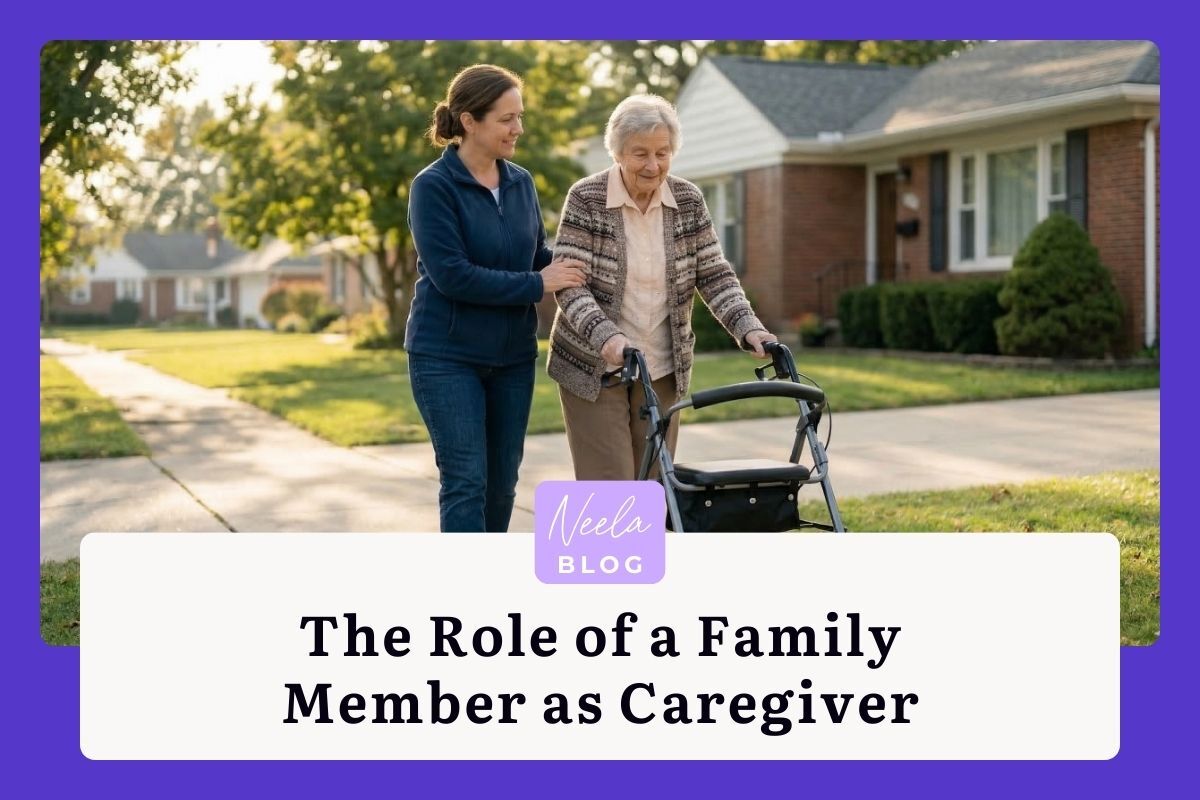
This might mean helping your father shower safely, preparing meals that accommodate dietary restrictions, or assisting with mobility from bed to wheelchair. The physical demands can be substantial, and many caregivers develop their own health issues from lifting, bending, and the constant physical presence caregiving requires.
Beyond personal care, most family caregivers become de facto medical coordinators. This includes managing multiple medications with different schedules and requirements, tracking symptoms and communicating changes to healthcare providers, scheduling and attending medical appointments, coordinating between specialists who don't always communicate with each other, and understanding insurance coverage and navigating claims.
Tools like Neela can help centralize this information, connecting appointments, notes, and documents into one continuous view of care. When you're juggling multiple specialists and medications, having everything in one place reduces the chaos significantly.
The hardest part of caregiving often isn't the physical tasks but the emotional labor. Your loved one may be grieving their lost independence, struggling with cognitive changes, or simply lonely. Being present, engaged, and patient through difficult moments is exhausting in ways that don't show up on any task list.
A present caregiver who shows up consistently matters more than a technically perfect one who's burned out and resentful. Give yourself permission to be good enough.
Caregiving responsibilities extend well beyond physical care into financial management and legal advocacy, areas where many family caregivers feel unprepared.
Many caregivers find themselves managing bill payments, tracking medical expenses, dealing with insurance claims and appeals, and making decisions about care costs. The financial complexity can be overwhelming. Medicare, Medicaid, private insurance, and out-of-pocket expenses all have different rules, and coordinating them requires significant time and attention.
If you're considering reducing your work hours to provide care, understand the long-term financial implications. Caregivers who leave the workforce lose not just current income but future Social Security benefits and retirement savings.
Legal documents like power of attorney and healthcare directives become critical when your loved one can no longer make decisions independently. A financial power of attorney allows you to manage bank accounts, pay bills, and handle property matters. A healthcare power of attorney lets you make medical decisions on their behalf.
These conversations are uncomfortable, but having them early, while your loved one can still participate in decisions, prevents crisis situations later. Keep copies of all important documents in multiple locations: a digital backup through a platform like Neela, plus a physical emergency binder with laminated summary sheets near the front door or in your car.
Caregiving takes a toll. Acknowledging this isn't weakness; it's reality.
Burnout develops gradually, which makes it easy to miss until you're in crisis. Physical warning signs include chronic fatigue that doesn't improve with rest, frequent illnesses from a weakened immune system, changes in sleep patterns, and unexplained aches and pains. Emotional warning signs include feeling overwhelmed by tasks that used to feel manageable, withdrawing from friends and activities you once enjoyed, irritability or resentment toward your loved one, and a sense of hopelessness about the future.
If you're experiencing several of these symptoms, you're not failing at caregiving. You're experiencing a predictable response to an unsustainable situation.
Respite care isn't a luxury or an emergency escape hatch. It's essential infrastructure for sustainable caregiving. Regular breaks allow you to recharge so you can continue providing care long-term.
Respite options range from a few hours of in-home help, typically costing $15-30 per hour, to adult day programs, usually $50-100 per day, to short-term residential stays. Many caregivers resist respite care because they worry no one else can provide care as well as they can. Here's the truth: a rested caregiver provides better care than an exhausted one, even if the respite provider does things differently.
When arranging respite care, prepare detailed instructions that include both medical needs and personal preferences: favorite conversation topics, calming techniques when anxious, specific food likes and dislikes. Neela can help organize this information so handoffs to respite providers become smoother.
You don't have to figure this out alone. Significant resources exist specifically for family caregivers.
Your local Area Agency on Aging is often the best starting point for discovering available resources. They can connect you with meal delivery programs, transportation assistance, and caregiver support services. Veterans and their families have access to additional programs through the VA, including respite care and caregiver support services.
Support groups, whether in-person or online, provide something equally valuable: connection with people who understand your experience. The isolation of caregiving can be profound, and knowing you're not alone matters.
Many caregivers learn skills on the job, which works until it doesn't. Formal training in areas like safe lifting techniques, medication management, and recognizing signs of decline can prevent injuries and improve care quality.
Hospitals and community colleges often offer caregiver training programs. Online resources have expanded significantly, making education accessible even for caregivers who can't leave home for classes.
First step to take today: Contact your local Area Agency on Aging and ask what caregiver support programs are available in your area. One phone call can open doors to resources you didn't know existed.
Family caregiving is one of the most demanding roles you'll ever take on, and also one of the most meaningful. Understanding your responsibilities, accessing available resources, and prioritizing your own sustainability aren't signs of weakness. They're what allows you to show up for your loved one over the long haul.
Start by identifying one area where you need support, whether that's organizing medical information, finding respite care, or connecting with other caregivers. Small steps compound over time. You're already doing harder work than most people realize. Now it's time to make sure you have the support to keep going.
Complete the form to receive notifications when new blogs are posted. You will only receive an email once a month!
Discover the complexities of family caregiving, the evolving roles, and essential strategies to sustainably support your loved ones while maintaining...

Learn how to split caregiving costs with siblings by using transparent financial systems that prevent resentment and ensure your parents receive...
Expert tips on family caregiving at home: responsibilities, safety modifications, medication management, emotional support, and financial planning...