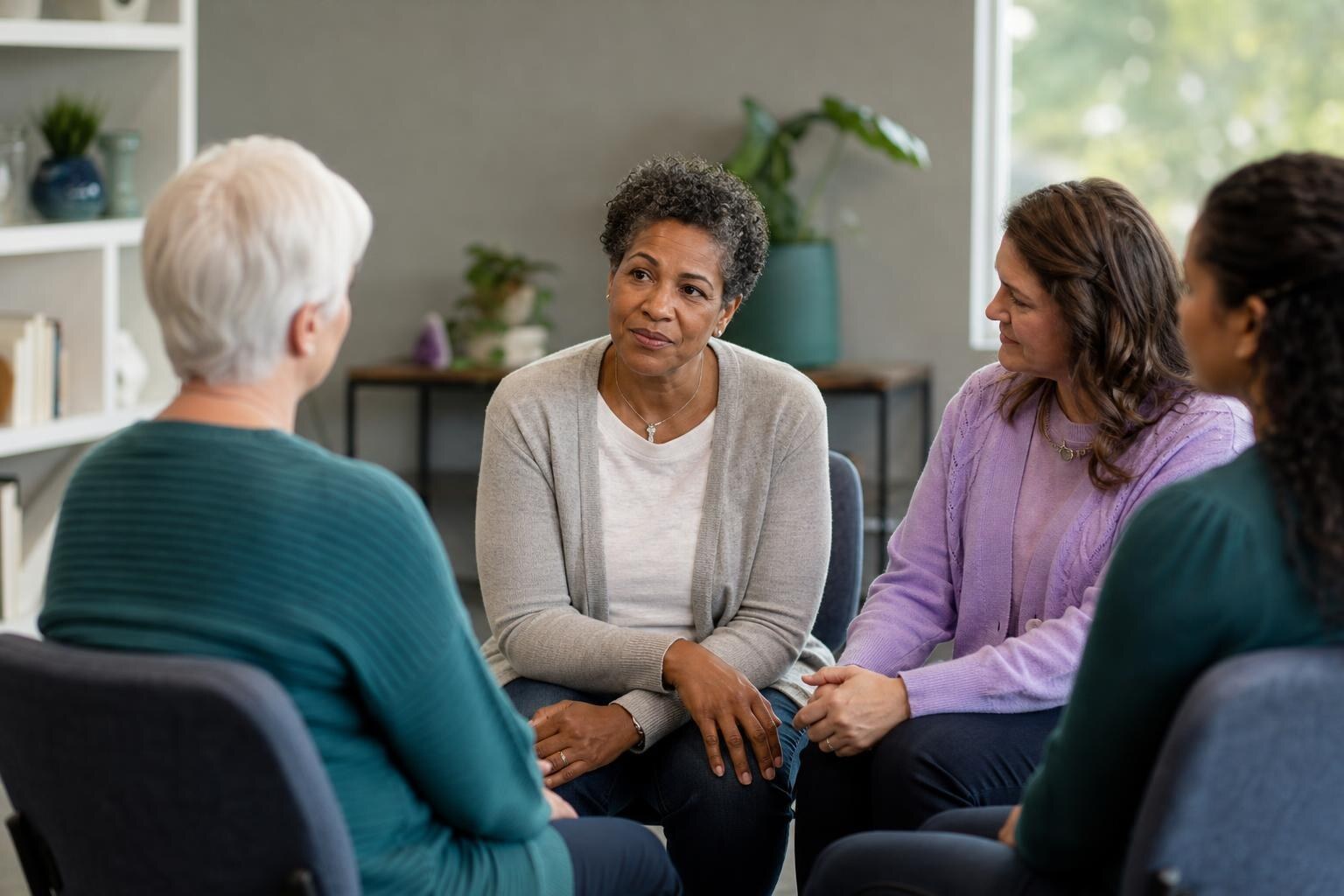
Choosing to look for peer support is a proactive step, and you're in good company. Around 63 million Americans now provide ongoing care for an adult or child with a disability. That's nearly one in four adults, which means someone near you is managing the same appointments, decisions, and late-night questions you are.
Whether you're an adult child helping an aging parent or a spouse caring for your partner, a caregiver support group can give you a place to swap ideas and be understood without explaining everything from scratch. The hard part is usually knowing where to start. There are local groups, video groups, condition-specific groups, and groups built around your role in your loved one's life.
The good news is that finding one is easier than it looks. A few phone calls or a short online search can turn up several options, and you can try more than one before you decide. Here's how to find a group that fits your situation and your schedule.
Why join a support group at all?
Caregiving can feel isolating, even when you're surrounded by people. A group connects you with others who understand your situation without needing the backstory.
Peer support offers three practical benefits:
- Less isolation: You meet people who are handling similar decisions, so you have more company along the way.
- Real-world tips: Members share what worked for them, from preparing for a neurology appointment to handling a parent who refuses help with bathing.
- Feelings that make sense: Frustration, sadness, and even moments of humor are common. Hearing others say them out loud reminds you that your reactions are normal and human.
Many family caregivers find that one good idea from a meeting saves them hours of trial and error. That makes the hour well spent.
What types of groups exist?
Groups usually fall into a few categories, and many overlap.
Condition-specific groups focus on one diagnosis, such as dementia, Parkinson's, cancer, or stroke. They're a good fit when you want detailed, disease-specific advice about symptoms, stages, and treatment questions.
Relationship-specific groups bring together people in the same role. Examples include groups for adult children, spouses, long-distance caregivers, and the sandwich generation. That last group is large: nearly 1 in 3 caregivers are raising children under 18 while also caring for an adult. A spouse caring for a partner often has different concerns than a daughter caring for her father, so these groups can feel especially relatable.
Format-based options include in-person, video, phone, text or forum-based, and faith-based groups. Pick the format that fits your life right now.
Groups also differ in how they're run. Professionally facilitated groups are led by a social worker, counselor, or trained staff member. They tend to stay structured and on topic. Peer-led groups are run by fellow caregivers and often feel more casual. Many people find facilitated groups helpful early on, while peer-led groups work well once they know what they need.
How do I find a caregiver support group near me?
Local resources are often closer than you expect. Start with these:
- Eldercare Locator: Call 1-800-677-1116 or visit eldercare.acl.gov to connect with services in your area.
- Your local Area Agency on Aging: Ask about its family caregiver program, which often runs or lists support groups. The federal Administration for Community Living also funds state units on aging to put the National Strategy to Support Family Caregivers into practice, so these programs keep growing.
- Hospitals and health systems: Social work departments frequently host groups or know who does.
- Senior centers, public libraries, and places of worship: Check bulletin boards, newsletters, and event calendars.
You can also ask your parent's doctor or the hospital discharge planner for local leads. They hear about community groups regularly and can point you to ones that fit your loved one's diagnosis.
A good first step is to make one phone call this week. Calling your Area Agency on Aging is a strong place to begin.
How do I find an online caregiver support group?
Online groups are a good fit if your schedule is unpredictable, you live in a rural area, or you're caring from a distance. Several national organizations run their own groups or communities:
- Family Caregiver Alliance (caregiver.org)
- Alzheimer's Association (alz.org), including its ALZConnected online community
- AARP caregiving community
- Well Spouse Association, for partners and spouses
- Parkinson's Foundation
- American Cancer Society
- Caregiver Action Network
- VA Caregiver Support Program, for families of veterans
Social media groups on Facebook and Reddit are also an option. They can be lively and available around the clock, but their quality and privacy vary a lot. Before you post details about your loved one, check whether the group is private, who moderates it, and whether members are kind to each other.
What should I look for when vetting a group?
Before you commit, ask the organizer a few questions:
- Who facilitates it? A trained professional, a peer volunteer, or a mix.
- How big is it? Smaller groups give everyone more time to talk. Larger groups offer more perspectives.
- What are the confidentiality rules? "What's said here stays here" is a reassuring standard.
- Is it free? Many are.
- How often does it meet? Weekly, twice a month, or monthly.
- Does it match your situation? Consider the condition, your relationship to your loved one, and your stage of caregiving.
Then trust your gut. The right group leaves you feeling supported and a little lighter. If you consistently leave a meeting feeling drained, it's fine to move on.
Many family caregivers try two or three groups before settling on one. Think of the first few visits as try-outs rather than commitments.
What happens at a first meeting?
Most groups follow a simple rhythm. Meetings often open with a check-in, where each person shares their name and perhaps a quick update. Some meetings then include a topic or a guest speaker, such as an elder law attorney or a memory care nurse. The rest of the time is usually open discussion, where members raise questions and trade ideas.
The most reassuring part is that you can simply listen. No one is required to share, and facilitators expect newcomers to observe at first. Saying "I'm new and just listening today" is completely welcome.
If you're joining by video, you can usually keep your camera off at first too. Go at whatever pace feels comfortable.
When is a support group not enough?
A group is a wonderful source of connection, but it has limits. If you notice low mood or anxiety that sticks around for weeks, talking with a therapist or your own doctor is the right next step. Research backs up how common this is: caregivers who felt they had no choice in their role report nearly double the poor mental health days compared with those who chose it. A support group works well alongside professional help. It doesn't replace it.
How do I make time for it?
The simplest approach is to treat your group like any other appointment. Put it on the calendar, set a reminder, and protect that hour the way you would a doctor's visit.
Then ask your care network for coverage. A sibling, friend, or neighbor can often step in for one hour, especially when they know the date well in advance. A clear, specific ask like "Can you sit with Mom every other Tuesday from 7 to 8?" is easier to say yes to than a vague request for help.
It also helps to keep your group's meeting times and the tips you pick up in the same place as the rest of your loved one's care information. Neela can help with this. She keeps your family's care information, appointments, and notes in one place, so you can jot down a useful idea after a meeting and share it with your care network. That way, the helpful tip about medication reminders reaches your brother too, instead of staying in your head.
For an easy first step, pick one meeting date and ask one person to cover that hour.
Finding the right fit
Walking into your first meeting, or clicking "join" on your first video call, is the hardest part. After that, it gets easier quickly. You'll start recognizing faces, learning names, and collecting ideas that make your days run a little more smoothly.
One group that fits your situation, your schedule, and your loved one's needs is enough. That might be a dementia group at the local hospital, a spouse-focused video group, or a long-distance caregivers' forum you check on Sunday nights.
Start small. Make one call to your Area Agency on Aging or browse one national organization's group listings today. Keep notes on what you find, try a couple of options, and notice which one leaves you feeling understood.
You're already doing the work of caring for someone you love. Finding people who get it is a smart, practical step, and when you're ready, your group is out there waiting.
Subscribe To Neela Blog
Complete the form to receive notifications when new blogs are posted. You will only receive an email once a month!
Posts by Tag
- Caregiver tips (39)
- Family Caregiver (39)
- Family Caregiver App (25)
- Caregiver App (20)
- AI (15)
- Caregiver Burnout (6)
- Caregiver Policy (5)
- Medical Records (5)
- Respite (4)
- Mental Health (3)
- Advocacy (2)
- estate planning (2)
- Burnout (1)
- For Veterans (1)
- Get Paid As A Family Caregiver (1)
- co-parenting (1)
- medicare (1)
- opinion (1)