3 min read

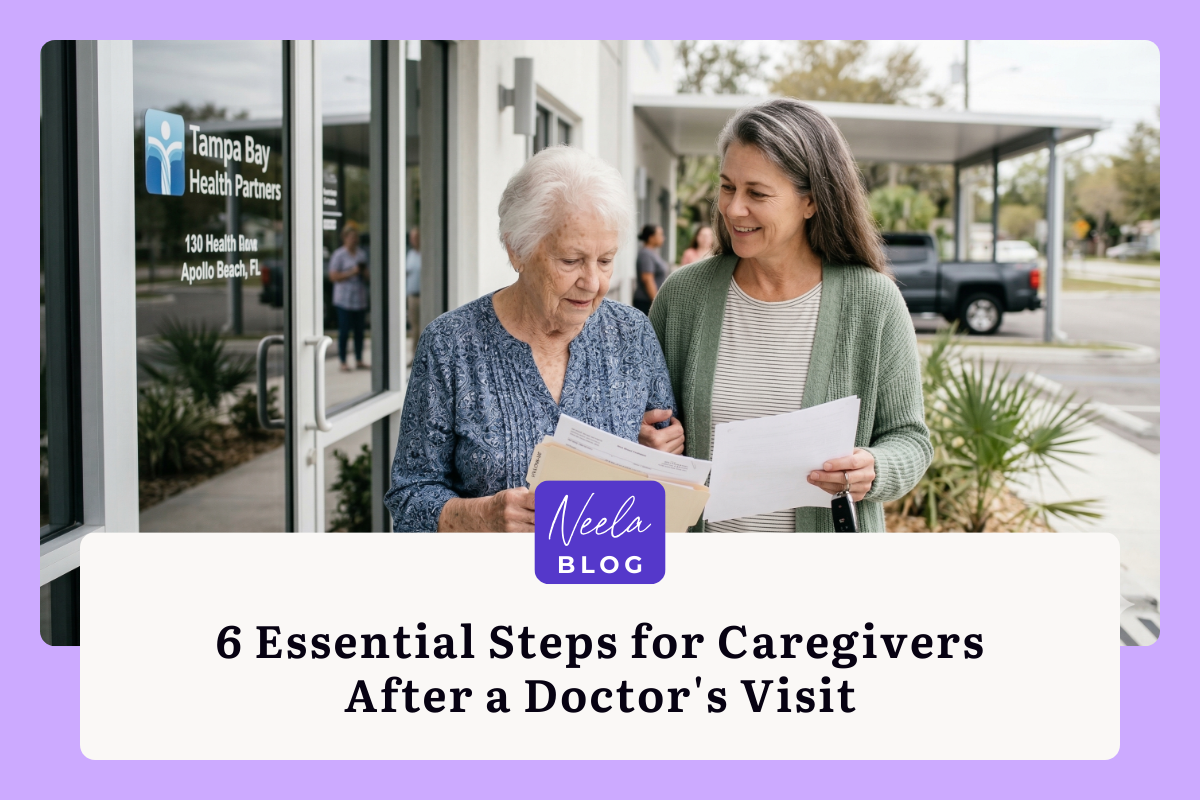
6 Essential Steps for Caregivers After a Doctor's Visit

6 Essential Steps for Caregivers After a Doctor's Visit
5:47

The appointment is over.

You walk out of the clinic holding discharge papers, prescription instructions, and a few scribbled notes. On the drive home, you suddenly remember three questions you meant to ask the doctor.

Sound familiar?

For caregivers, the real work often begins after the appointment ends. A single 30-minute visit can generate hours of follow-up:

  • New medications to track
  • Specialists to schedule
  • Family members to update
  • Symptoms to watch for
  • Instructions that are easy to forget

Most caregiving advice solves this with a checklist. And while checklists help, they quickly turn into another burden when you're already overwhelmed.

The better approach isn't just remembering the steps. It's having a system that helps you manage them.

Here’s what caregivers typically need to do after a doctor’s visit, and how modern tools like Neela can make each step dramatically easier.

1. Capture What Actually Happened at the Appointment

After an appointment, details fade fast.

Caregivers often leave with partial notes that later become confusing:

  • Was the medication supposed to start today or next week?
  • Did the doctor say call if symptoms last three days or seven?
  • Was the fatigue a concern or expected?

Traditionally, caregivers sit down later to rewrite their notes and organize paperwork.

A simpler approach is to store everything from the appointment in one place immediately, including:

  • key takeaways from the visit
  • diagnoses and instructions
  • follow-up tasks
  • uploaded documents and lab orders

Neela helps caregivers keep this information connected to the rest of the care journey, so you aren't searching through notebooks or folders weeks later.

2. Keep the Health Record Updated Automatically

Every appointment adds new pieces to the medical story:

  • medication changes
  • new diagnoses
  • vital signs
  • lab orders
  • doctor observations

When these details live in different places, it's easy for important information to slip through the cracks.

Caregivers often try to solve this with spreadsheets or scattered documents. But maintaining those systems takes time and discipline.

Neela keeps everything connected in a single personal health record, so appointment notes, medications, and documents stay organized without requiring constant manual updates.

Instead of rebuilding the timeline every time you see a new doctor, the information is already there.

3. Manage Medication Changes Without Guesswork

Medication changes are one of the most common outcomes of a doctor’s visit.

That might mean:

  • starting a new prescription
  • adjusting a dosage
  • stopping an existing medication
  • watching for side effects

When caregivers are managing multiple medications, small mistakes can quickly become serious problems.

Most families rely on pill organizers, paper lists, and phone reminders. While helpful, these tools often live separately from the rest of the care plan.

With Neela, medication changes can be tracked alongside symptoms, appointments, and notes. That way the full context of a treatment change is easy to see later.

Instead of wondering when something started, you can look back and know exactly what changed and when.

4. Coordinate Follow-Up Care

Doctor visits often generate new tasks that need quick follow-up:

  • scheduling lab work
  • contacting specialists
  • completing diagnostic tests
  • sending records to another provider

These steps are easy to forget when the paperwork gets buried or instructions are unclear.

Caregivers frequently find themselves calling offices weeks later trying to piece together what was supposed to happen.

Keeping appointment instructions, referrals, and care tasks in one place makes it far easier to stay on track.

Neela helps caregivers organize follow-up steps so important care decisions don’t get lost between appointments.

5. Keep the Entire Care Team Informed

Caregiving rarely happens alone.

Family members, home aides, and other healthcare providers all need accurate updates about what changed during an appointment.

Without a shared system, this usually turns into:

  • long text threads
  • repeated phone calls
  • confusion about the latest instructions

When everyone is working from different information, mistakes become more likely.

Neela allows caregivers to share updates in one central place so everyone involved in care can stay informed without constant back-and-forth.

6. Track What Happens After the Visit

The weeks after an appointment are often when the most important information appears.

Caregivers may notice:

  • side effects from new medications
  • improvements or worsening symptoms
  • changes in sleep, appetite, or energy

Doctors rely heavily on these observations at the next visit.

But remembering those details weeks later is nearly impossible without a record.

Instead of keeping scattered notes or trying to remember patterns, Neela allows caregivers to track symptoms and observations alongside medications and appointments.

This creates a clearer picture of what’s actually happening between doctor visits.

Caregiving Shouldn't Require a Dozen Systems

Caregivers have always had to manage the same checklist after every appointment:

organize notes, track medications, schedule follow-ups, update family, and monitor symptoms.

The difference today is that caregivers no longer have to manage all of it manually.

Tools like Neela bring these tasks together so the information from one appointment stays connected to the entire care journey.

Instead of juggling notebooks, reminders, and folders, caregivers can focus on what matters most: helping their loved one stay safe, informed, and supported.

How Recording a Doctor’s Visit Helps Patients Stay Focused and Informed

How Recording a Doctor’s Visit Helps Patients Stay Focused and Informed

At work, many of us rely on AI tools to record meetings, summarize discussions, and turn conversations into clear next steps. Not because we are...
Read More
Family Caregiver App: Tools, Examples, and How to Choose the Right One

Family Caregiver App: Tools, Examples, and How to Choose the Right One

A family caregiver app is a mobile application designed to help unpaid caregivers manage the complex demands of supporting a loved one. These tools...

Read More
Why Caregivers Still Need a Dedicated Care Coordination Companion, Even With ChatGPT Health

Why Caregivers Still Need a Dedicated Care Coordination Companion, Even With ChatGPT Health

When OpenAI introduced ChatGPT Health, it sparked real excitement. The idea of combining conversational AI with health data from your phone feels...

Read More