How to Manage an Aging Parent's Finances Without Taking Over
Learn how to help an aging parent with money through simple conversations and systems that protect them while preserving their independence.
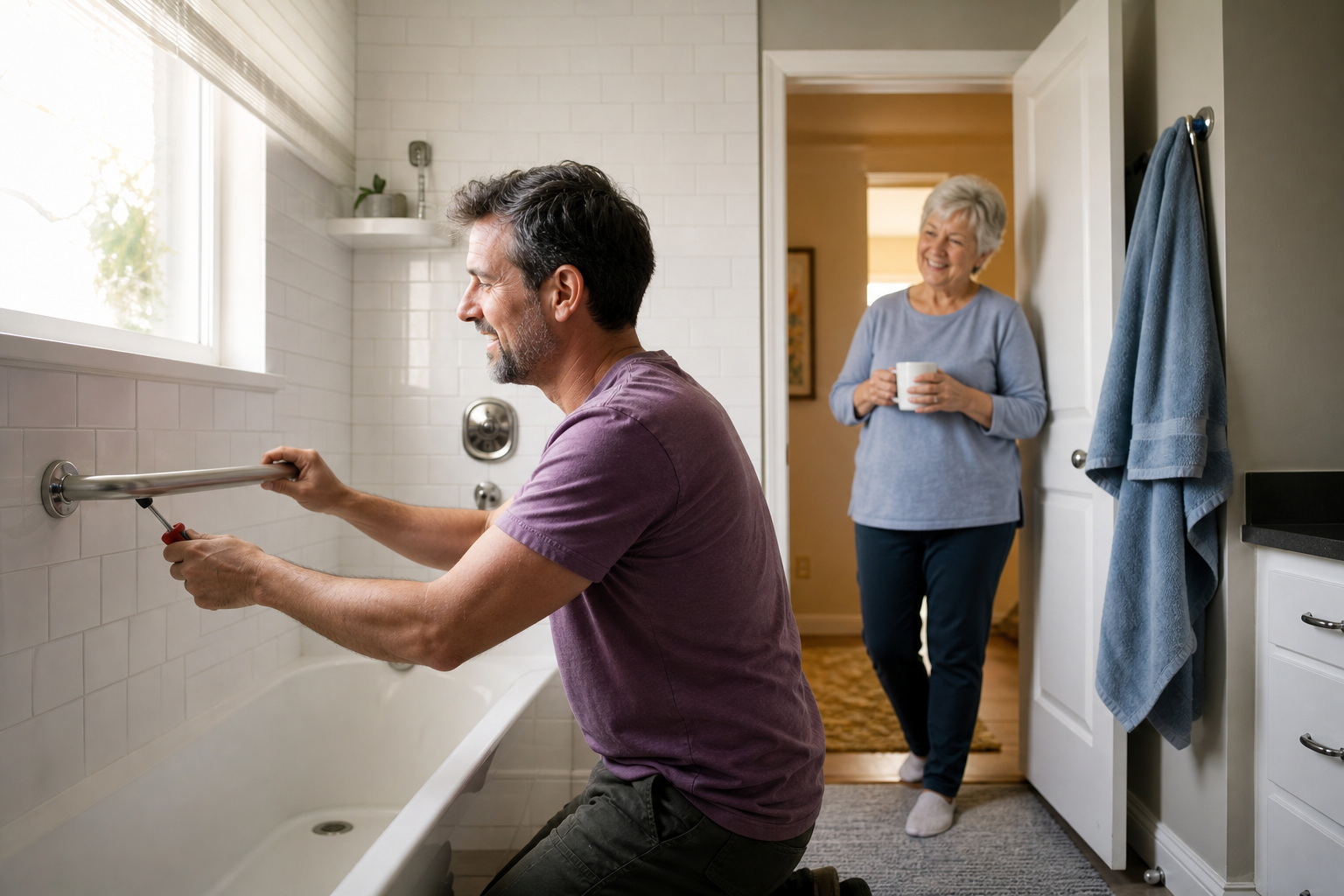
Most falls at home happen in a few predictable places: the bathroom, the stairs, the bedroom at night, and cluttered walkways. Most of the fixes are cheap and quick. Walk the house room by room with the checklist below, then ask the doctor about the two things a checklist can't fix: medications and balance.
Maybe it was a stumble on the porch steps, or a phone call that started with "I'm fine, but..." Whatever brought you here, you're already taking the most useful step a family caregiver can take: looking at your parent's home with fresh eyes. Grab this list on your next visit and walk through the house together.
This is general information, not medical advice. Talk with your parent's doctor about their specific needs.
The CDC identifies falls as the leading cause of injury for adults 65 and older. Falls are also common. About one in four older adults falls each year, and a first fall makes another one more likely. That is why early action pays off, and why small changes made now matter so much.
A full walkthrough usually takes about an hour. Tick items off as you go, and note anything that needs a second trip to the hardware store.
How you bring it up matters too. Frame each change as a tool that keeps your parent doing things on their own. Many parents welcome a grab bar once they see it as a way to keep showering without help.
Entryway and outside
Stairs
Bathroom
Bedroom
Kitchen
Living areas and hallways
If you'd like a trained eye, ask the doctor for a referral to an occupational therapist for a home safety evaluation. They often spot hazards families overlook.
You don't need expensive gadgets to make a real difference. These simple, low-cost aids cover most homes:
One device deserves special care: canes and walkers. A cane that's the wrong height can make balance worse. Ask for a physical therapist to fit it properly instead of guessing or borrowing one from a neighbor.
A home checklist covers the house. The doctor covers your parent. The CDC created a framework called STEADI to help doctors screen older adults for fall risk, and you can ask for a falls risk assessment by name at the next appointment.
Bring these topics with you:
Stronger legs and better balance protect against falls in a way no grab bar can. The National Institute on Aging recommends staying active with a mix of balance, strength, and endurance activities, and its exercise guidance is a friendly place to start.
Tai chi is a favorite for good reason. Its slow, flowing movements build balance and leg strength, and many community centers offer classes for beginners. Simple balance exercises, like standing on one foot while holding a counter, can be done at home. Light strength training, such as sit-to-stand practice from a sturdy chair, helps too.
A physical therapist can build a program around your parent's health, abilities, and goals. That personal plan is often what keeps people going.
If a fall happens, stay calm and take it one step at a time.
See the doctor even after a "minor" fall. Falls can signal new health issues, from medication changes to infections.
Then log it: the date, time, where it happened, what they were doing, and whether they felt dizzy. Note near-falls too. A pattern of falls or near-falls is information the doctor needs.
Some falls are a signal to look at the bigger picture. Consider reassessing when you see repeated falls, a fall with an injury, trouble getting up alone, or a fear of falling that starts shrinking daily life (skipping walks, avoiding the shower, staying in one chair all day).
These signs usually mean it's time for more support at home, a few hours of help each week, or a new conversation about living arrangements. Your parent can keep their independence through all of it. Our guide to 10 Signs Your Elderly Parent Needs Help can help you sort through what you're noticing. If a fall leads to a hospital stay, A Hospital Discharge Checklist for an Elderly Parent walks you through the transition home.
Patterns only help when someone can see them. Log every fall and near-fall in Neela's Notes, so the details are visible to the doctor and to the whole care network, including siblings who live far away.
Keep your parent's medication list current in Neela too. When it's time for a review, the pharmacist and doctor can check it for fall risk without anyone digging through pill bottles. Record that appointment with Scribe, and everyone in the care network gets the transcript and summary so they know what changed.
What is the most common cause of falls in the elderly?
Usually a combination of factors, rather than one single cause. Muscle weakness, balance problems, medications, vision changes, and home hazards often add up together. That's why fall prevention for older adults at home works best when you address both the house and your parent's health.
What are the most useful fall prevention devices for elderly parents?
Grab bars, non-slip treads, motion-sensor night lights, a shower chair, and a raised toilet seat cover the most common risks. A properly fitted cane or walker comes next, fitted by a physical therapist.
How often should I use a fall prevention checklist?
Walk through once now, then again whenever health changes, after a hospital stay, or with the seasons (ice and early darkness bring new risks).
Do fall prevention exercises for seniors really help?
Yes. Balance and strength training, including tai chi, are among the most recommended steps. A physical therapist can tailor a program to your parent.
What's the easiest first step?
Pick one room, usually the bathroom, and finish it this weekend. Small wins build momentum, and each fix makes the home safer for your loved one.
Complete the form to receive notifications when new blogs are posted. You will only receive an email once a month!
Learn how to help an aging parent with money through simple conversations and systems that protect them while preserving their independence.

Learn to identify key signs your elderly parent needs help with daily living so you can provide the right support and prevent a potential health...

Home care, assisted living, or a nursing home for your aging parent? A needs-based decision guide with costs, what Medicare covers, and what to...