5 min read
Family Health History Questions to Ask Your Parents This Thanksgiving
Alexis Villazon : Published
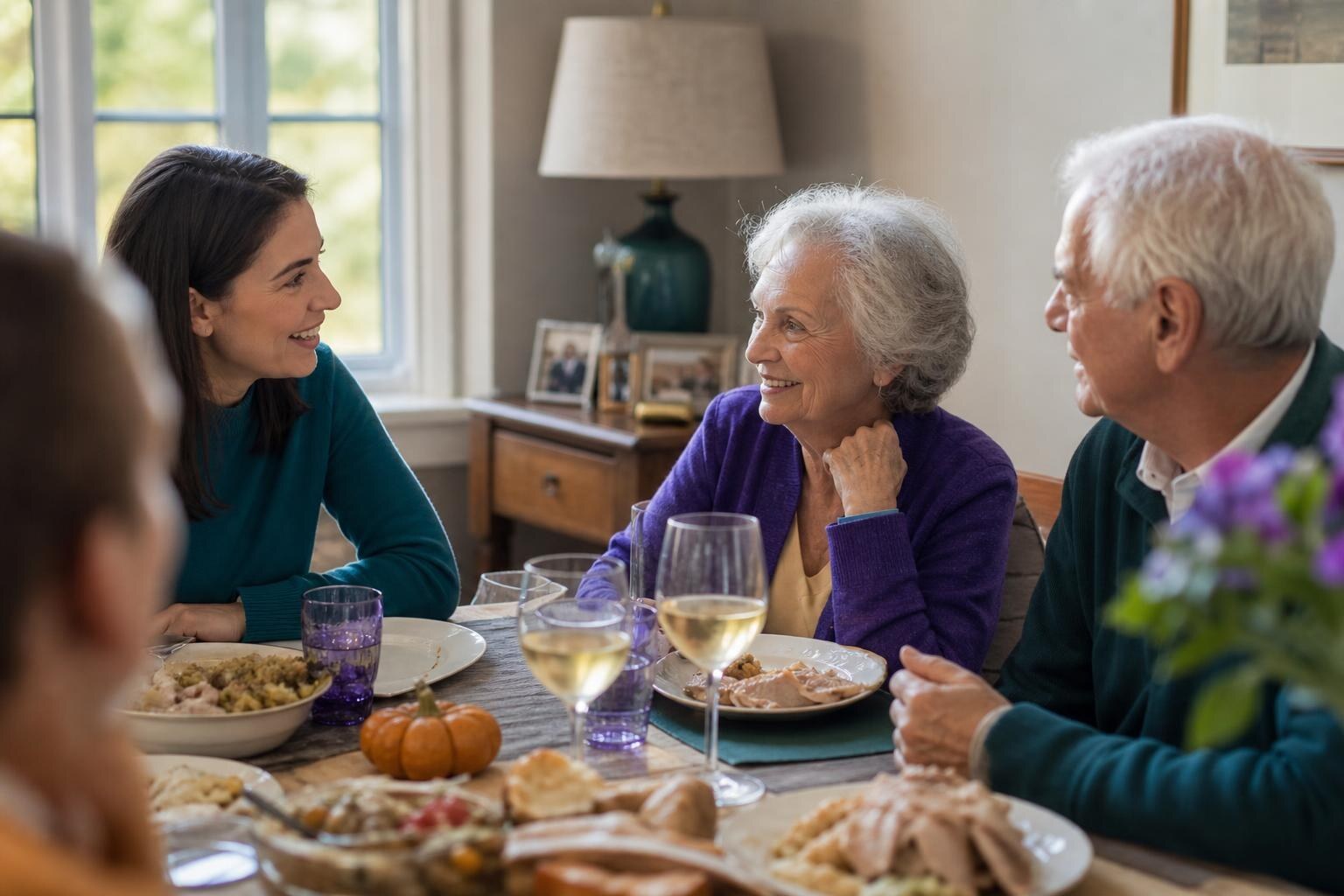
Pass the stuffing, then pass down a little history. This Thanksgiving, you have a rare chance to learn something your parents may never have written down: the health stories that shaped your family. Those stories can guide your parent's care today and your kids' care years from now.
This guide offers questions you can ask between pie and dishes, plus easy ways to keep everything you learn organized. You don't need a clipboard or a medical degree. All you need is curiosity, a few good questions, and a place to keep the answers once the leftovers are gone.
Why National Family Health History Day Matters for Your Family
In 2004, the U.S. Surgeon General named Thanksgiving National Family Health History Day. The reasoning was simple: Thanksgiving is one of the few times each year when three generations sit at the same table. Grandparents, parents, and kids are all in one room, and the people who hold the memories are right there.
The tradition continues this year. Thanksgiving falls on November 26, 2026, and the day is still a nudge for families to use the gathering to talk about conditions that run in the family.
There is plenty of room to start. Surveys consistently find that most U.S. adults consider family health history important, yet far fewer have ever written it down. If you record even a handful of answers this year, you'll be ahead of most families.
The Connection Between Family Health History and Future Care
Doctors ask about family history because it changes what they recommend. If your parent's sibling had colon cancer at 48, your parent's doctor may approach screening differently. The same information can affect your kids decades from now, because their pediatrician and future doctors will want to know which conditions show up across generations.
Patterns matter most. Clusters of breast, ovarian, colorectal, prostate, or melanoma cancers can determine whether someone qualifies for genetic counseling. Details that seem minor at the table can turn out to be useful in the exam room.
When you fill out an intake form, the questions usually cover the same areas: heart disease, high blood pressure, cancer, diabetes, mental health, and dementia. Those are the areas your Thanksgiving questions will cover too.
Questions to Ask About Chronic Conditions and Mental Health
Keep these handy on your phone and pick just one or two that fit the moment.
Heart health
- Has anyone in the family had a heart attack, stroke, or heart surgery?
- Did anyone have high cholesterol or need a pacemaker?
Blood pressure
- Who in the family took blood pressure medication?
- Did anyone have kidney problems linked to high blood pressure?
Cancer
- What types of cancer have relatives had, and on which side of the family?
- Did anyone have genetic testing after a diagnosis?
Diabetes
- Did anyone have type 1 or type 2 diabetes?
- Did your mom or grandmother have diabetes during pregnancy?
Mental health
- Did anyone struggle with depression, anxiety, or addiction?
- Were there relatives people described as "nervous" or "moody"? (Older generations often used gentler words.)
Memory Loss and Dementia History
Memory questions can feel tender, so approach them with care. Try asking, "How was Grandma's memory as she got older?" or "Did anyone get diagnosed with Alzheimer's or another type of dementia?" Ask roughly when the changes started, since timing helps your parent's doctor understand the pattern.
Pregnancy and Childhood Health Patterns
These questions mostly benefit your kids and their pediatrician. Ask about miscarriages, premature births, birth defects, and childhood conditions such as asthma, severe allergies, or learning differences. Your parent might also remember your own early health history, which you may never have known.
Understanding Age of Diagnosis and Cause of Death
A diagnosis is useful, and the age at diagnosis is even more useful. Heart disease at 45 tells a doctor something very different than heart disease at 85. Earlier onset often points toward a hereditary link and can shift when screening begins.
Questions to ask:
- How old were you, or your siblings, when you were diagnosed?
- How old were your parents when they found out about their conditions?
- What did Grandpa and Grandma pass away from, and how old were they?
- Were there relatives who died young? Do you know why?
Some answers will be fuzzy, and that's perfectly fine. "Sometime in his fifties" is still valuable. Write down what you hear and mark any guesses so you can confirm them later with an aunt or cousin.
How to Bring Up Health History Without Making It Heavy
Timing matters. Wait until after dinner, when people are relaxed and lingering over coffee, rather than while everyone is passing dishes. A quiet moment while washing up with your mom often works better than a group announcement.
Ask for stories instead of diagnoses. "What was Grandpa like when you were growing up?" opens doors that "Did Grandpa have heart disease?" might close. Health details tend to come out naturally once the memories start flowing.
A few more ideas many family caregivers find helpful:
- Ask one or two questions at a time, then let the conversation breathe.
- Mention that the day has an official name. It gives you a friendly reason to ask.
- Offer to be the family record-keeper. Many relatives appreciate knowing one person is keeping everything in one place, and Neela makes that role easy because the record lives somewhere the whole care network can see it.
Your first step: choose the two questions you most want answered and save them on your phone before you arrive.
Organizing Your Findings for the Care Network
Notes scribbled on a napkin have a way of disappearing. Within a day or two of Thanksgiving, move what you learned into one shared spot.
Here's a simple structure:
- Relative's name and relationship (maternal grandmother, paternal uncle)
- Condition and age at diagnosis
- Cause and age of death, if relevant
- Source of the information and how confident it is
Neela gives you a natural home for this. Store the written summary and any old records, like a grandparent's death certificate, in Vault, her secure, HIPAA-compliant document storage, so your siblings can access it too. Add a quick note before your parent's next appointment listing the questions the new history raises, then let Scribe summarize what the doctor says. That way the full picture stays in one continuous view. If you're also managing your kids' paperwork, Neela's guide on how to organize your child's medical records pairs well with this.
Next Steps With My Family Health Portrait and Your Doctors
Once your notes are organized, you can turn them into a clear chart with My Family Health Portrait, a free tool originally created by the Surgeon General and CDC. You enter relatives and their conditions, and it creates a family tree style summary you can print or save. Keep a copy in Vault alongside your notes.
Next, share it with the right people:
- Your parent's doctor: Bring the summary to the next visit and ask whether any patterns change screening timing or warrant genetic counseling.
- Your kids' pediatrician: Share the conditions that run on both sides, especially childhood conditions and early-onset diagnoses.
- Your own doctor: The same history applies to you.
Update the record each year. Next Thanksgiving, you'll be adding details instead of starting from scratch.
Frequently Asked Questions About Family Health History
What if my parents don't remember much?
Whatever they recall is useful. Aunts, uncles, and older cousins can fill gaps, and old letters or obituaries often mention causes of death.
What if a relative doesn't want to talk about it?
Respect that and try again another time, or ask a different relative. A gentle "no pressure" goes a long way.
How far back should I go?
Focus on parents, grandparents, siblings, aunts, uncles, and first cousins. Those relatives tell doctors the most.
Do I need to know exact diagnoses?
No. Approximate ages and general descriptions still help your parent's doctor and your kids' pediatrician ask better questions.
Is this only useful for adoptive or blended families?
Every family benefits. Adoptive and blended families can record what they know and note where gaps exist.
The best family health history questions to ask your parents this Thanksgiving are the ones that start with "Tell me about..." Each answer you capture becomes a gift to your parent's care and your kids' future. From doctor visits to medication lists, Neela keeps your whole family organized in one shared place, so this record is ready whenever you need it. Try Neela free and see how she fits into your routine.
Subscribe To Neela Blog
Complete the form to receive notifications when new blogs are posted. You will only receive an email once a month!
Posts by Tag
- Caregiver tips (40)
- Family Caregiver (40)
- Family Caregiver App (25)
- Caregiver App (20)
- AI (15)
- Caregiver Burnout (6)
- Caregiver Policy (5)
- Medical Records (5)
- Respite (4)
- Mental Health (3)
- Advocacy (2)
- estate planning (2)
- Burnout (1)
- For Veterans (1)
- Get Paid As A Family Caregiver (1)
- co-parenting (1)
- medicare (1)
- opinion (1)