Is ChatGPT HIPAA Compliant? What Families Need to Know
Learn why ChatGPT is not HIPAA compliant and what families need to know to protect their private medical data when using AI chatbots for health...
6 min read
Alexis Villazon : Published
%209.28.jpg)
Your child has two homes, two bedrooms, maybe two sets of everything from toothbrushes to board games. But they only have one body and one health history. When a pediatrician asks about the last round of antibiotics or an allergist needs to know which immunizations are current, "I think the other parent has that info" isn't a safe answer. Keeping medical records organized across co-parenting households is one of those tasks that sounds simple until you're actually living it: half-remembered medication names, insurance cards photographed on the wrong phone, and appointment summaries buried in a text thread from three months ago. The good news? Building a shared system doesn't require you and your co-parent to agree on everything. It just requires you both to see the same information. One shared picture beats two incomplete ones every time.
A child's health information shouldn't live in two separate silos. When each parent keeps their own partial set of notes, allergies get left off intake forms, dosage changes slip through the cracks, and nobody can find the referral letter when it matters most. The goal is one shared view that both households can trust.
Your custody agreement determines who holds legal medical decision-making authority, but regardless of that arrangement, both parents benefit from seeing the same facts. Think of it less like merging two filing cabinets and more like opening a single window that both of you can look through.
Texts and group chats are great for quick updates, but they're terrible archives. Try finding a specific medication name in a thread that also includes pickup logistics, soccer schedules, and a debate about screen time. Paper files aren't much better when they're split between two houses.
The first step is simple: agree with your co-parent that health information deserves its own dedicated space, separate from day-to-day logistics. That one decision changes everything, because it means neither of you has to dig through unrelated messages to find critical details about your child's care.
A single source of truth means one place where both parents can see the same medication list, the same allergy notes, the same provider contacts, and the same appointment history. No version conflicts. No "I updated my copy but forgot to tell you."
Neela was built for exactly this kind of shared family management. She brings appointments, notes, documents, medications, and provider details into one view that your entire care network can access. Instead of maintaining two half-records in two households, you maintain one complete record together. That's a small shift in setup, but it eliminates a huge category of dropped balls.
Kids accumulate providers fast: a pediatrician, a dentist, maybe an orthodontist, an allergist, a therapist. Each one has a different office number, patient portal, and preferred way of scheduling. When two parents are managing these relationships independently, double-booked appointments and missed follow-ups become almost inevitable.
A shared calendar dedicated to your child's medical appointments removes the guesswork. Both parents can see what's coming up, who scheduled it, and which parent is planning to attend. This is especially helpful for recurring visits like quarterly check-ups or monthly therapy sessions.
Set a simple rule: whoever books the appointment adds it to the shared calendar immediately, including the provider name, address, and reason for the visit. If you're using Neela, her calendar lives alongside all your child's other health information, so appointment details stay connected to the notes and documents they relate to.
Create a running list of every provider your child sees. For each one, include the practice name, phone number, patient portal login (or a note about which parent manages it), and what they treat. This sounds basic, but it saves real time when you need to call the ENT at 7 p.m. on a Tuesday and can't remember which practice it was.
Update this directory whenever a provider changes or a new specialist enters the picture. A living document beats a static list every time.
The appointment itself is only half the job. What the doctor actually said, what changed, and what needs to happen next: that's the information your co-parent needs. And relying on memory or a quick text summary ("doc said she's fine, new vitamin, I'll send details later") leaves too much room for things to fall through.
This is where a tool like Neela's Scribe feature becomes genuinely useful. Scribe records and summarizes appointment details into clear, readable notes. The parent who attended the visit doesn't have to reconstruct the conversation from memory, and the parent who wasn't there gets the same quality of information.
Think about what usually happens: one parent walks out of the pediatrician's office, gets in the car, and tries to relay everything while also driving and mentally processing what they just heard. Important details get lost. With Scribe, the summary is captured once and shared immediately with your co-parent through your shared care network.
Kids' medication needs change frequently, especially during growth spurts or when managing conditions like asthma or ADHD. A shared medication list should include:
Both parents need to see this list and both need to update it. A dosage change that only one household knows about can lead to a child getting the wrong amount at the other home. Keep this list current, and flag changes the moment they happen.
Some documents you hope you'll never need in a hurry: insurance cards, immunization records, surgical consent forms, care plans. But when you do need them, you need them immediately, and "it's in a folder at the other house" isn't going to work at an urgent care clinic.
Both parents should have instant access to the child's insurance card (front and back), the current immunization record, and any standing orders or care plans from specialists. Neela's Vault provides HIPAA-compliant document storage where both parents can upload and retrieve these files from any location.
A hybrid approach works well here too. Keep digital copies in your shared Vault, and each parent can maintain a small physical emergency folder (a laminated summary sheet with insurance info, allergies, and emergency contacts) in their car or by the front door. Digital for completeness, physical for speed.
Post-surgery instructions, physical therapy exercises, dietary restrictions after an allergy diagnosis: these documents tend to arrive at one parent's email and stay there. Upload them to your shared space the same day you receive them.
This is especially important for instructions that both households need to follow consistently. If your child's allergist provides a new action plan for anaphylaxis, both homes need that plan posted on the refrigerator, not just one. No one benefits when health information gets stuck with one person.
Medical care for kids generates a surprising number of follow-up tasks: schedule the six-month dental cleaning, pick up the new prescription, call the insurance company about that denied claim, order a replacement EpiPen before it expires. When these tasks aren't tracked in a shared space, they either get done twice or not at all.
A shared task list lets both parents see what needs to happen, who's handling it, and when it's due. Assign tasks based on who's better positioned that week, not based on assumptions. If one parent has a flexible afternoon and the pharmacy is near their office, they grab the refill. If the other parent is taking the child to a follow-up, they handle the paperwork.
The key insight here is that alignment matters more than identical rules. You don't need to parent the same way in every respect, but you do need to be working from the same medical facts and the same task list.
Sometimes you just need a quick answer. "When was the last tetanus booster?" "What pharmacy has the current prescription?" "What did the dermatologist say about that rash at the last visit?" Digging through files or texting your co-parent and waiting for a reply isn't always practical, especially during a stressful moment.
Neela's Chat feature (Ask Neela) lets you ask questions in plain language and get answers drawn from your own stored care information. She pulls from the notes, documents, and medication records you've already entered, so you're not searching the internet for generic advice: you're getting answers specific to your child. That's a meaningful difference when you're standing in an urgent care waiting room trying to remember whether your child's last antibiotic was amoxicillin or azithromycin.
Your child deserves two parents who are both fully informed, not two parents each holding half the picture. The system you build doesn't need to be complicated. Start with one shared space for medical information, commit to updating it after every appointment, and let the small habits compound over time. You'll find that fewer things slip through the cracks, conversations with your co-parent become less tense, and your child gets more consistent care across both homes. If you're ready to stop piecing together information from scattered texts and paper files, Neela can help you build that shared view at neelacares.com.
Complete the form to receive notifications when new blogs are posted. You will only receive an email once a month!
Learn why ChatGPT is not HIPAA compliant and what families need to know to protect their private medical data when using AI chatbots for health...
 Neela Editorial Team : 8/11/26, 11:23 AM
Health in ChatGPT is built for one logged-in person. A family caregiving app is built for the several people sharing the work. What each one does.
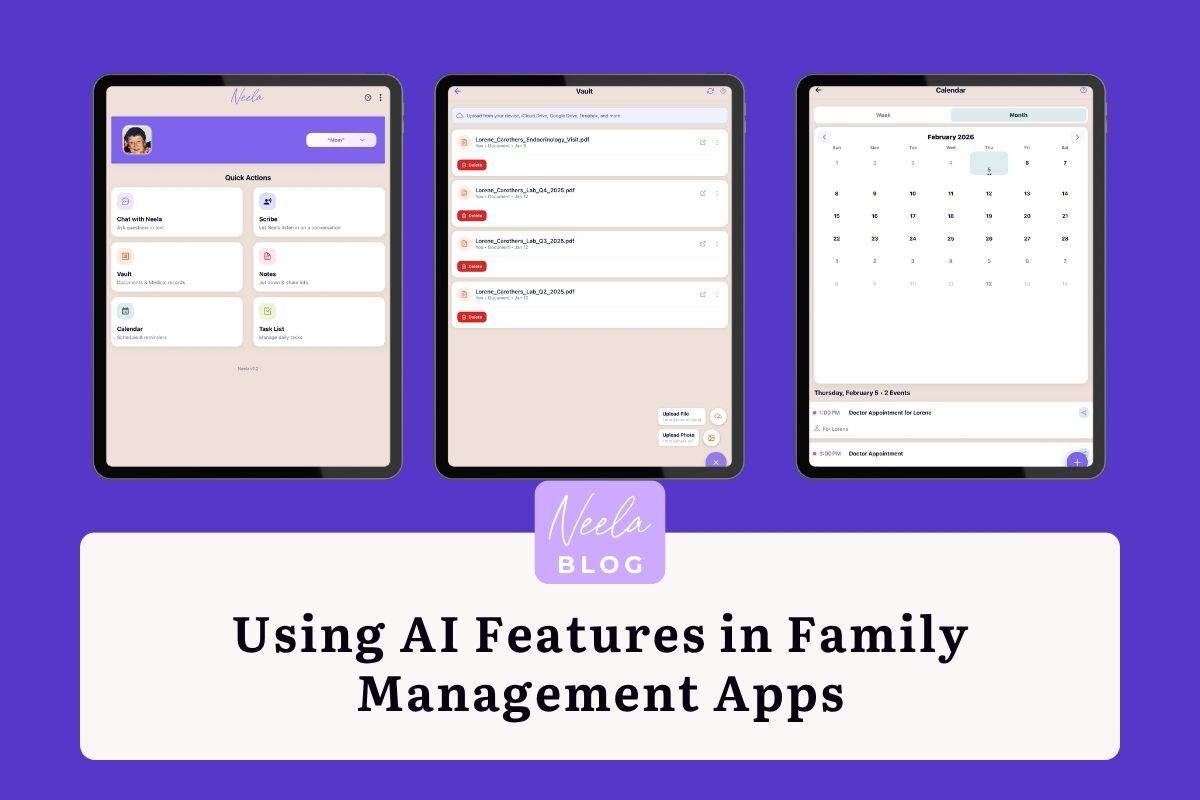
Discover how AI features in family management apps simplify scheduling, meal planning, and communication, helping families regain time and reduce...