5 min read
When Should an Aging Parent Stop Driving? (And How to Have the Talk)
Alexis Villazon : Published
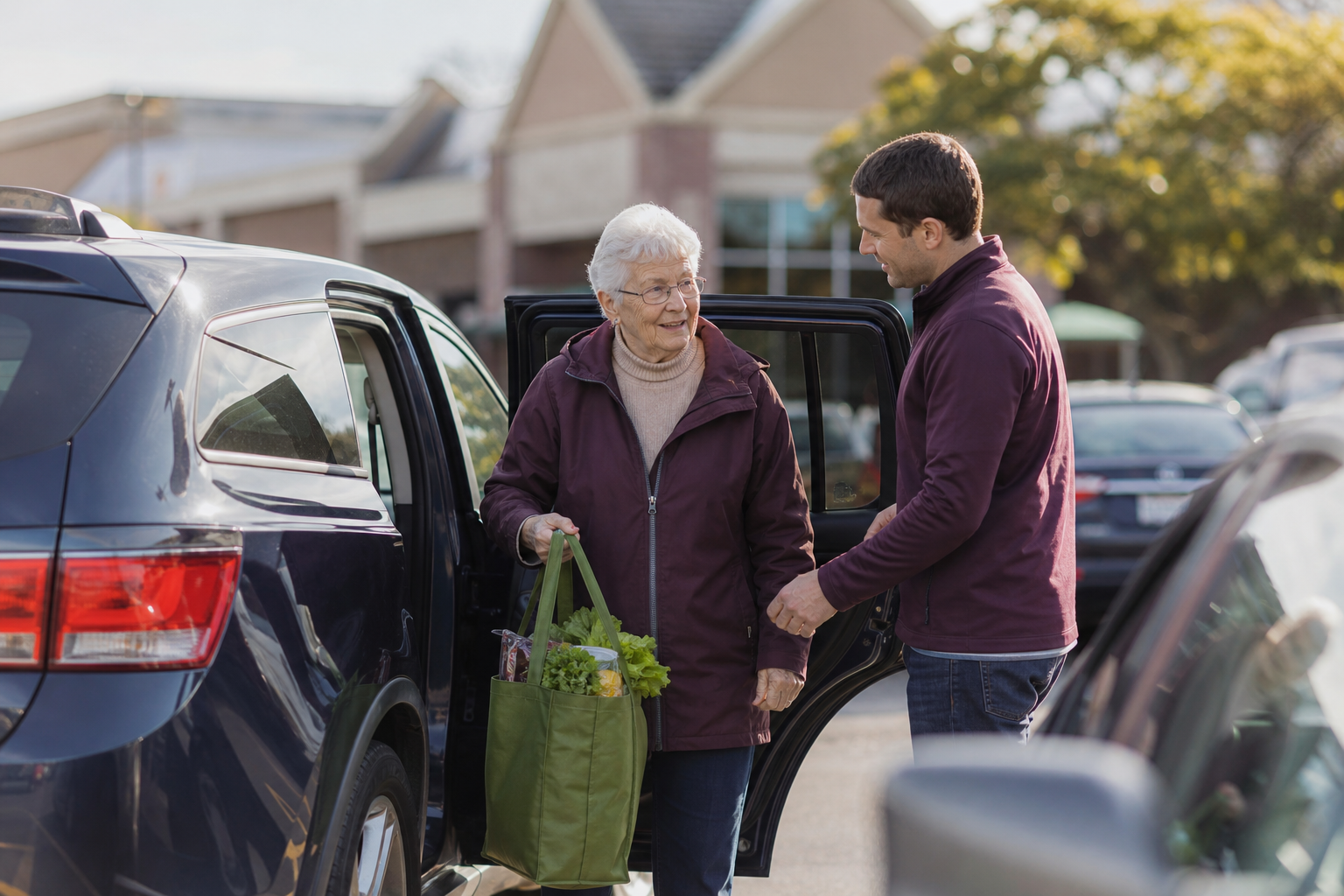
Your dad still drives to the hardware store every Saturday. Your mom still picks up her friends for church. Lately, though, you've noticed small things: a scrape on the bumper nobody mentions, a missed turn on a road she's driven for thirty years. You love them, and you're not sure what to do next.
You're paying attention early, and that matters. Driving often stands for freedom, routine, and identity, which is why this topic can feel so tender. If you're wondering how to stop an elderly parent from driving without damaging your relationship, the answer usually has less to do with taking keys and more to do with careful observation, honest conversation, and a solid plan for getting around.
The concern is real. According to the CDC, 25 older adults are killed and more than 740 are injured in crashes every day in the United States. You can approach this calmly and respectfully, one step at a time.
This is general information, and driving laws vary by state.
At what age should elderly stop driving?
There is no set age when older adults should stop driving. The real signal is a pattern of specific warning signs, such as new dents, getting lost on familiar routes, near-misses, slower reactions, or health changes that affect vision, thinking, or mobility. The conversation usually goes better when it starts early, stays specific, and comes with a plan for getting around without a car.
Plenty of people in their late 80s drive safely, while some people in their 60s face conditions that make driving risky. Age alone tells you very little. Ability tells you everything.
Cognitive changes deserve special attention. They can creep in slowly, and many people keep driving long after memory or judgment has started to slip, so watching for patterns gives you a clearer picture than any birthday.
Warning signs to watch for
One rough day doesn't mean someone needs to stop driving. A cluster of signs over weeks or months is what tells you it's time to talk. For a broader look at changes beyond driving, see 10 signs your elderly parent needs help.
Behind the wheel signs
- Unexplained scratches or dents on the car, garage door, or mailbox
- Getting lost on familiar routes
- Drifting between lanes or straddling the center line
- Trouble with left turns or merging into traffic
- Running stop signs or red lights
- Confusing the gas and brake pedals
- Slower reaction time to cars braking or pedestrians crossing
- Friends or family avoiding riding along
- Two or more near-misses or tickets in a short period
The most useful first step is to ride as a passenger for a few trips. Stay relaxed and observant. Afterward, write dated notes about what you saw ("March 4: missed the stop sign on Elm Street"). Specific notes will make your eventual conversation fair and grounded.
Health and body signs
Some warning signs show up outside the car. Watch for new diagnoses that affect thinking, movement, or vision, such as dementia, Parkinson's disease, or a stroke. Pay attention to medications or combinations that cause drowsiness or affect alertness, and ask the pharmacist if you're unsure.
Vision changes, like cataracts, glaucoma, or trouble seeing at night, can make driving harder long before anyone admits it. Physical changes count too. If your parent has stiffness in the neck or shoulders that makes it hard to turn and check blind spots, that limits safe lane changes and backing up.
How to talk to elderly parent about driving
Timing helps. Pick a calm moment, not right after a scare when emotions run high. Have one person lead the conversation, ideally whoever your parent trusts most. A room full of siblings can feel like an ambush.
Use "I" statements and the specific examples from your notes rather than broad accusations. Acknowledge what driving means to them, and ask what worries them. A first conversation that opens the topic is a success. You don't have to settle anything today.
A few phrasings that many family caregivers find helpful:
- "I noticed you had trouble with the left turn onto Main Street last week, and I've been thinking about it."
- "I know driving is a big part of how you live your life. I want to help you keep that freedom as long as it's safe."
- "What would worry you most if you drove less?"
- "Would you be open to a checkup with your doctor so we have a clearer picture?"
Close by agreeing on one next step, like a doctor visit or a professional driving evaluation.
The doctor's role: Can a doctor stop someone from driving?
Your parent's doctor is one of your best allies. Ask the doctor to assess vision, cognition, reaction time, and how current medications might affect alertness. Some parents accept a doctor's recommendation more easily than a son's or daughter's, because it feels like a medical decision rather than a family judgment.
So, can a doctor stop someone from driving? In most states, a doctor cannot revoke a license directly. A doctor can recommend that your parent stop, and in some states doctors are required or permitted to report concerns to the DMV. The DMV makes the actual licensing decision. Rules vary, so check your state DMV's website.
For an objective answer, ask about a professional driving evaluation. These assessments are usually led by an occupational therapist or certified driver rehabilitation specialist who evaluates vision, physical mobility, and processing speed. AAA's senior driving site explains how to find one. A neutral expert can take much of the emotion out of the decision.
Understanding elderly driving laws by state and DMV actions
Elderly driving laws by state differ quite a bit. Some states let family members submit a confidential report about an unsafe driver. Others require a physician's report before the DMV reviews someone's license.
License renewal rules for older drivers also vary. Depending on where your parent lives, renewal may involve:
- In-person renewal instead of online or by mail
- A vision test at each renewal
- Shorter renewal periods after a certain age
- A road test in specific circumstances
Rather than relying on general summaries, go straight to your state DMV's website for current rules and reporting forms. The National Highway Traffic Safety Administration (NHTSA) and AAA both offer older driver resources, including self-assessment tools your parent can use privately. The National Institute on Aging also has helpful guidance on older drivers.
Keeping independence without the car
This is the part that makes the conversation land. Most people resist giving up driving because they fear being stuck at home. Build the ride plan before anyone takes the keys.
A strong plan often includes:
- A family driving schedule shared with everyone, so rides to appointments and errands are covered
- Rideshare and senior transportation programs, including options through your local Area Agency on Aging
- Grocery and pharmacy delivery for routine needs
- Volunteer driver programs in your community
- Faith community rides to services and social events
One option is a trial period. Your parent tries the plan for a few weeks while still licensed, which lets them see it works and keeps the decision in their hands. Many families also find that selling the car frees up money that can go toward rides, insurance savings included.
Using Neela to support your care network
When the doctor weighs in on driving, use Scribe to record the appointment. Neela creates a transcript and summary your whole family can read, so everyone hears the same input instead of a secondhand version.
Once the new ride schedule takes shape, share it with your care network in Neela so siblings, neighbors, and friends can take turns without endless group texts. For more on staying aligned, see how to keep your whole family on the same page about a parent's care.
What to do if your parent refuses
Hearing "no" is common, and it doesn't mean the conversation failed. Keep talking. Return to the topic gently over time, using new examples from your notes.
If you're still stuck, bring in support:
- Involve the doctor and ask them to share their recommendation directly.
- Suggest the driving evaluation as a neutral way to settle the question.
- Use the DMV reporting route as a last resort, following your state's process.
This is hard, and it's okay to feel torn. Your parent's dignity matters, and so does the safety of everyone else on the road. For more ideas, read what to do when an elderly parent refuses help.
Frequently asked questions about elderly driving safety
What are the signs an elderly parent should not drive?
Look for patterns: unexplained dents, getting lost on familiar routes, lane drifting, near-misses, slower reactions, and health changes that affect vision, thinking, or mobility.
Can a doctor stop someone from driving?
In most states, no. A doctor can recommend stopping and may report concerns to the DMV, which makes the licensing decision.
Where can I find elderly driving laws by state?
Your state DMV website is the best source. NHTSA and AAA also offer helpful older driver resources.
At what age should elderly stop driving?
There's no set age. It depends on ability, not birthdays.
What's the gentlest way to stop an elderly parent from driving?
Start early, use specific examples, involve the doctor, and have a ride plan ready before the keys change hands.
You don't have to get this perfect. Ride along, take notes, and plan one calm conversation. Each small step protects your parent's safety and their sense of independence, and that's something to feel good about.
Subscribe To Neela Blog
Complete the form to receive notifications when new blogs are posted. You will only receive an email once a month!
Posts by Tag
- Caregiver tips (41)
- Family Caregiver (41)
- Family Caregiver App (25)
- Caregiver App (20)
- AI (15)
- Caregiver Burnout (6)
- Caregiver Policy (5)
- Medical Records (5)
- Respite (4)
- Mental Health (3)
- Advocacy (2)
- estate planning (2)
- Burnout (1)
- For Veterans (1)
- Get Paid As A Family Caregiver (1)
- co-parenting (1)
- hospice (1)
- medicare (1)
- opinion (1)
- palliative (1)