Why Regular Health Apps Fall Short for Family Caregivers (And What Actually Helps)
Family caregivers need apps designed for their unique challenges, not just for patients. Discover what works for effective caregiving and symptom...
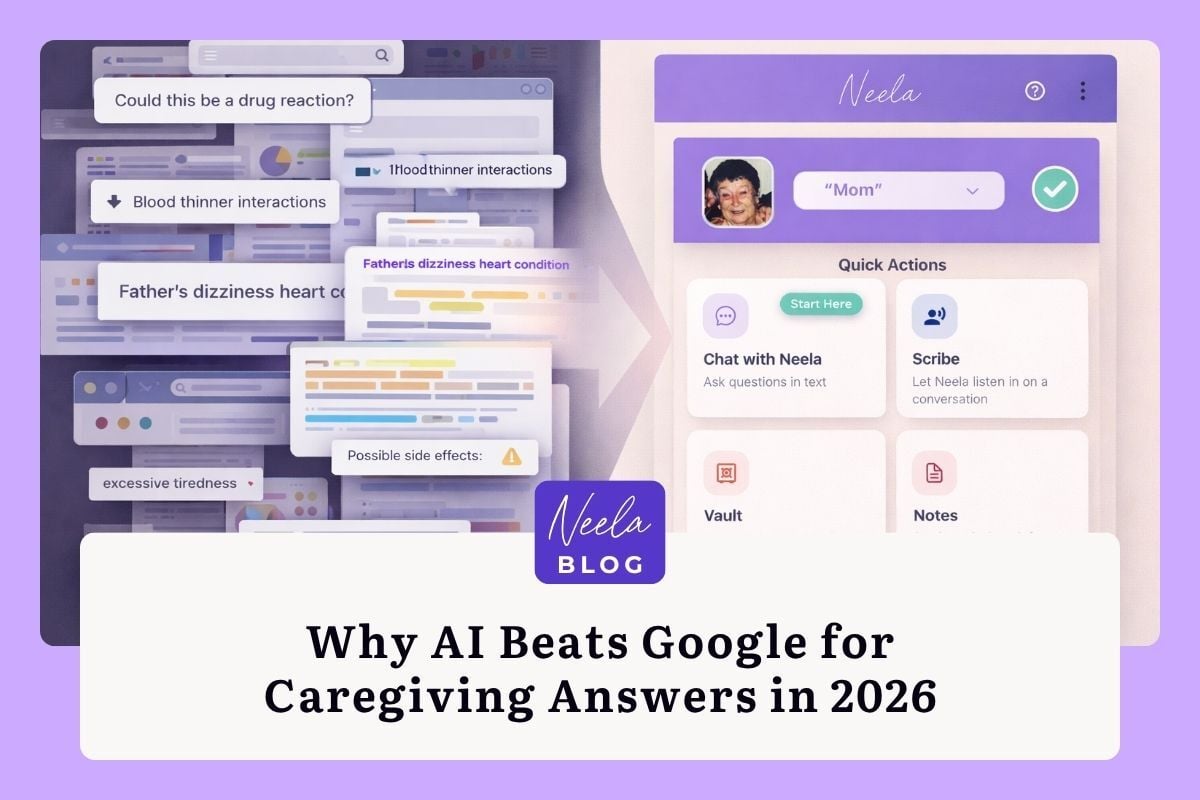
Caregiving questions are rarely simple. They are usually urgent, emotional, and deeply specific to one person's health, medications, routines, and risks. Traditional search engines were built to return pages that match keywords, but caregiving often requires something more nuanced than a list of links.
In 2026, AI has become a more useful starting point for many caregivers because it can respond to context, not just search terms. Instead of sending families down a rabbit hole of medical jargon, conflicting advice, and generic articles, AI can help organize information, clarify next steps, and answer questions in a way that feels more relevant to the situation at hand.
That does not mean AI is flawless, or that it should replace doctors and licensed professionals. But when caregivers need help understanding symptoms, preparing for appointments, making sense of treatment instructions, or figuring out what questions to ask next, AI often delivers the kind of practical guidance that Google was never designed to give.
Google's fundamental architecture assumes you know exactly what to ask. Type "dementia sundowning solutions" and you'll get articles written for healthcare professionals, forum posts from 2019, and sponsored content for memory care facilities. None of these results know that your mother specifically gets agitated around 4 PM, that she's already on Seroquel, or that you've tried the recommended lighting adjustments without success.
The cognitive load of sifting through search results compounds caregiver stress. Research from AARP shows that family caregivers spend an average of 24 hours per week on caregiving tasks, and a significant portion of that time goes toward information gathering. Every minute spent evaluating whether a search result applies to your situation is a minute not spent actually providing care or resting.
Modern AI assistants remember your previous conversations. They build understanding over time. When you ask about sundowning, an AI that knows your mother's medication list, her typical daily schedule, and what you've already attempted can skip the generic advice and offer specific next steps.
This contextual awareness transforms the experience from research project to conversation with a knowledgeable partner. You're not starting from scratch every time you have a question. The AI recalls that her doctor mentioned possible medication timing adjustments at last month's appointment, and it can suggest you revisit that conversation with specific questions prepared.
Here's what I've seen repeatedly with families managing multiple conditions: the biggest danger isn't lack of information, it's information that doesn't account for the full picture. A generic article about managing diabetes won't mention that your father's kidney function affects which medications are safe, or that his depression medication can mask certain warning signs.
Neela allows caregivers to centralize medical records, creating a comprehensive view that AI can reference when answering questions. Instead of manually cross-referencing medication lists with symptom descriptions, the AI does that synthesis instantly. When you ask whether a new supplement is safe, it checks against existing prescriptions and known conditions rather than offering a generic "consult your doctor" response.
Medication management is where AI's value becomes undeniable. The average senior on Medicare takes 4.5 prescription medications, and drug interactions cause over 125,000 deaths annually in the United States. Google can tell you that Drug A and Drug B might interact. AI can tell you that based on your father's specific dosages, timing, and kidney function, here's the actual risk level and what symptoms to watch for.
A good first step: upload your care recipient's complete medication list, including over-the-counter drugs and supplements, to a platform that can flag interactions automatically. This takes twenty minutes and can prevent serious complications.
I recently helped my mom understand her Medicare Advantage plan. Google could find articles about Medicare Advantage generally, but couldn't tell us whether this specific plan covered the home health aide hours her mother needed.
AI can read that policy document and answer direct questions: "Does this plan cover skilled nursing visits after hospitalization? What's the daily copay for memory care? Are there network restrictions for physical therapy?" These answers emerge in seconds rather than hours of manual searching and phone calls to insurance representatives who may not know the answers themselves.
At 3 AM when your father falls but insists he's fine, you need fast, specific guidance. Is this a 911 situation? Can it wait until morning? What should you document? Google gives you articles about fall prevention written months or years ago. AI gives you a decision framework based on his specific conditions, medications that might affect bleeding or consciousness, and what you're observing right now.
This isn't about replacing medical professionals. It's about getting informed enough to make better decisions about when professional help is needed. AI can help you articulate symptoms clearly when you do call the nurse line, making that conversation more productive.
Burnout isn't a luxury concern for caregivers. It's essential infrastructure to address. The physical signs creep in gradually: persistent fatigue that sleep doesn't fix, frequent headaches, getting sick more often. The emotional signs follow: irritability with your care recipient, guilt about that irritability, withdrawal from friends who "don't understand."
AI assistants trained on caregiving contexts can recognize these patterns when you describe how you're feeling. They won't replace a therapist, but they can validate that what you're experiencing is normal, suggest specific coping strategies, and help you recognize when you've crossed from stressed to genuinely depleted.
Neela's approach to tracking care patterns over time means the AI can notice changes in your own language and engagement, gently flagging when you might need support. This matters because caregivers are notoriously bad at recognizing their own decline until crisis hits.
Knowing your mother needs a geriatric care manager is different from finding one who accepts her insurance, has availability within the next month, and specializes in dementia care. Google can provide lists. AI can filter those lists based on your specific requirements, check availability, and even draft the initial inquiry email.
The practical logistics of caregiving consume enormous energy. Finding a respite care provider, for instance, requires identifying candidates, verifying credentials, explaining your care recipient's needs, and coordinating schedules. When you use Neela to centralize care documents and schedules, you can share relevant information with potential providers quickly, including soft details like her favorite conversation topics and what music calms her during transitions.
Respite care isn't an emergency escape hatch. It's non-negotiable maintenance that keeps primary caregivers functional. A present and engaged caregiver matters more than a technically perfect but emotionally exhausted one.
Financial benchmarks help with planning: adult day programs typically run $75-150 per day, while in-home respite care ranges from $20-35 per hour depending on your location. Your Area Agency on Aging can connect you with subsidized options, and veterans may access respite benefits through the VA.
The obvious concern with AI caregiving tools is privacy. You're sharing sensitive medical information, family dynamics, and vulnerable moments. This concern is legitimate, and not all AI platforms handle data responsibly.
Look for platforms with clear data retention policies, healthcare-specific compliance certifications, and transparent explanations of how your information trains or doesn't train their models. Establish your own protocols: review uploaded documents annually, use standardized naming conventions like "2026-01-15_LabResults_CBC" for searchability, and maintain a seven-year retention period followed by secure deletion to prevent medical identity theft.
Accuracy matters equally. AI can confidently state incorrect information, so verify critical medical guidance with professionals. The goal isn't blind trust but informed partnership. AI handles the information synthesis and preliminary research, while you and your care team make final decisions.
The shift beyond Google for caregiving answers in 2026 reflects a broader truth: complex, personal situations require tools that understand context. Search engines remain useful for general information, but caregiving demands more. It demands a partner that remembers, synthesizes, and responds to your specific reality.
Start small. Upload one care document. Ask one question you've been struggling to answer. See whether the response feels more useful than your last Google search. For most caregivers I've worked with, that single experience shifts their entire approach to finding help.
Complete the form to receive notifications when new blogs are posted. You will only receive an email once a month!
Family caregivers need apps designed for their unique challenges, not just for patients. Discover what works for effective caregiving and symptom...
Explore how future trends of AI in caregiving technology empower family caregivers with smarter tools to reduce stress and provide better care for...
Discover top caregiver apps designed for seniors that simplify care management, enhance communication, and provide peace of mind for families.