5 min read

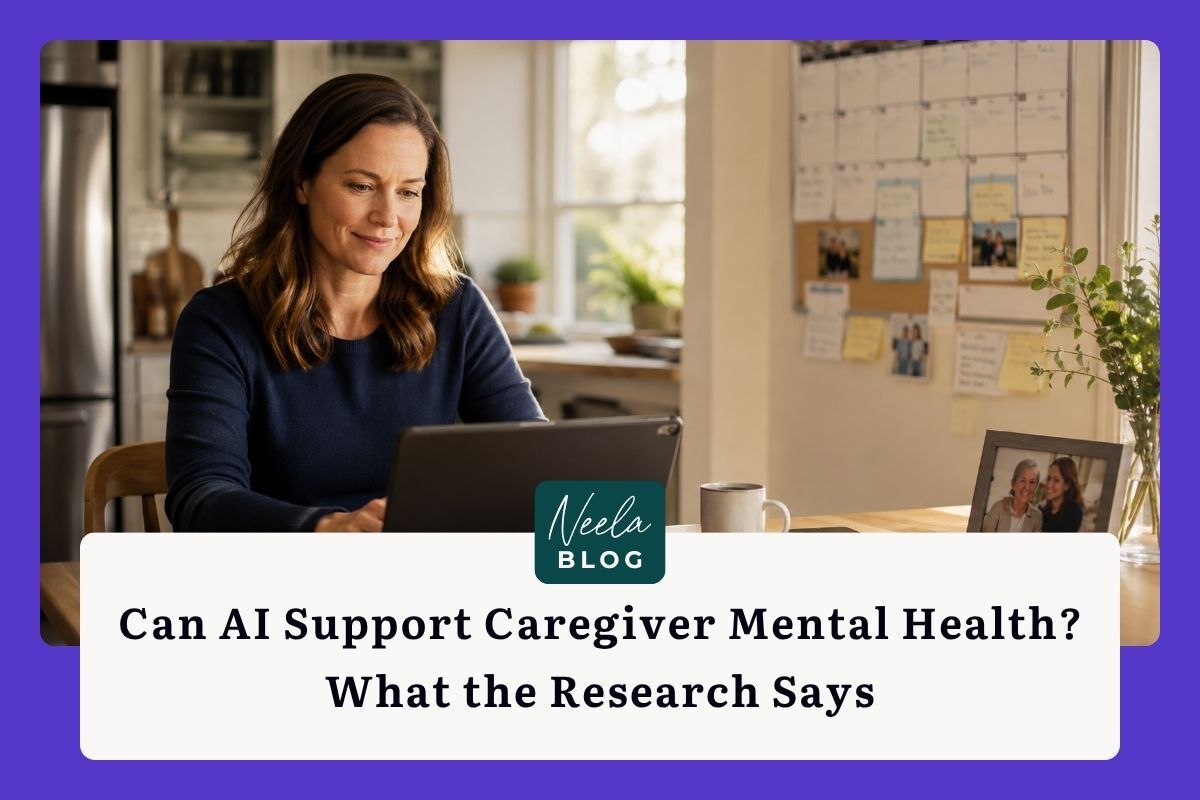
Can AI Support Caregiver Mental Health? What the Research Says

Can AI Support Caregiver Mental Health? What the Research Says
9:21

The honest answer has two halves, and they point in opposite directions. When researchers test AI as a stand-in for a therapist, the results are poor enough that four state legislatures have written laws about it. When you look at what AI does for the volume of information a family caregiver carries around, the picture changes completely.

That distinction is worth understanding if you are one of the 63 million people in the US caring for a family member (AARP and the National Alliance for Caregiving, Caregiving in the US 2025). It changes what you should ask AI to do, and what you should stop asking it to do.

What researchers found when they tested AI as a therapist

In June 2025, a team led by Jared Moore and Declan Haber presented findings at the ACM Conference on Fairness, Accountability, and Transparency (FAccT) after running therapy chatbots through clinical scenarios. Three results stood out. The chatbots expressed stigma toward certain mental health conditions. They produced responses researchers classified as unsafe roughly 20% of the time, compared with roughly 7% for licensed human therapists. And in some scenarios, they failed to recognize cues of suicidal ideation.

That third finding carries a specific risk. The interaction feels supportive while the thing that matters most goes unaddressed, which is a worse outcome than a tool that never pretended to help.

General health accuracy is uneven too. A BMJ Open study published April 14, 2026 tested five chatbots (Gemini, DeepSeek, Meta AI, ChatGPT, and Grok) against 250 health questions and rated 49.6% of responses problematic, with 30% somewhat problematic and 20% highly problematic. ChatGPT landed at 52%. Reference completeness averaged 40% across all five, and no chatbot produced a fully accurate reference list.

Four states have already written this into law

Regulators moved faster here than on most AI questions.

Illinois passed the Wellness and Oversight for Psychological Resources Act (HB 1806, Public Act 104-0054), effective August 1, 2025. It bars AI from delivering standalone therapy, with penalties up to $10,000. Nevada's AB 406 (June 2025) similarly bars AI from providing behavioral healthcare. Utah's HB 452 (March 2025) takes a lighter approach centered on disclosure. California's SB 243 passed the legislature in September 2025.

Separately, the Federal Trade Commission opened a 6(b) inquiry into AI companion chatbots on September 11, 2025, issuing orders to Alphabet, Character.AI, Meta and Instagram, OpenAI, Snap, and xAI. That inquiry focuses on harm to minors, though the underlying question applies to adults too. What happens when a product engineered to feel like a relationship gets used for something clinical?

Where AI actually helps family caregivers

Here is the part the research does support. Families are already using AI for health, and they are using it for practical reasons.

West Health and Gallup surveyed 5,660 US adults between October and December 2025 and released results on April 15, 2026. About one in four had used an AI tool for health information in the previous 30 days. Among those recent users, 59% did research before a doctor visit and 56% did research afterward. Trust splits roughly into thirds, and only 4% said they strongly trust the accuracy of what they get back.

That pattern describes preparation. People are using AI to understand what they are walking into and to make sense of what they heard once they got home, while holding a healthy amount of skepticism about the answers.

Adoption is climbing in exactly the age range that matters for family caregiving. AARP Research found generative AI use among adults 50 and older reached 30% in 2025, up from 18% in 2024 and 9% in 2023 ("Navigating the World of AI," September 2025). And 55% of family caregivers now use at least one form of technology in the role, according to Caregiving in the US 2025.

Why the information load is the part worth solving

Managing care for a parent means running a live inventory in your head. The cardiology appointment on Tuesday. The medication change your brother asked about. Whether the insurance claim cleared. What the doctor said about her blood pressure three weeks ago.

None of that is clinical work, and none of it feels like caregiving while you are doing it. It still takes up room. When that information lives in a system instead of in your memory, the room comes back. That is a practical change rather than a therapeutic one, and it is measurable in a way that "feeling supported by a chatbot" is not.

What that looks like in practice

Neela was built for the organizational side of caregiving. She is a family lifestyle app, not a mental health tool and not a medical records portal. The connection to how you feel is indirect and real: fewer things to hold, fewer things to forget, fewer people asking you for updates.

One place where the documents live

Neela's Vault holds insurance cards, advance directives, discharge paperwork, and everything else currently scattered across email attachments and your phone's camera roll. It is HIPAA compliant and shared with your care network, so nothing important is sitting in one person's inbox.

The shared calendar does similar work. When your siblings can see the same schedule you see, you stop being the only person who knows what is happening on Thursday.

A record of what the doctor actually said

Scribe records a visit on your phone and turns it into a transcript and a written summary. Audio is never stored, and the feature is mobile only. What you keep is text you can read, search, and share with your care network.

The practical effect is that you can put your pen down during an appointment and go back to listening. Reconstructing a specialist visit from memory at 9pm is a specific kind of unpleasant, and it is avoidable.

A shared view instead of a group text

Most family friction around caregiving traces back to information asymmetry. One sibling thinks the medication changed. Another has not heard about the new appointment. Nobody is being careless, they are working from different versions of the truth.

Shared tasks and notes fix the mechanics of that. Everyone in the care network sees the same list, the same updates, and the same history. Conversations move from "why didn't you tell me" toward "I saw the update, what do you need from me."

Five rules for using AI well as a caregiver

Ask it to translate. Paste the discharge summary or lab result and ask what the terminology means. Then bring your questions to the appointment instead of leaving with them.

Ask it to prepare you. A list of questions before a specialist visit is a strong use case. A treatment decision is not.

Verify anything that matters. Given the BMJ Open findings on reference completeness, treat citations from a chatbot as a place to start rather than a source.

Know what you are using. Health in ChatGPT rolled out broadly on July 23, 2026 to logged-in US users 18 and older. It is a consumer feature and it is not covered by HIPAA. OpenAI's terms are reasonable (health conversations are not used to train foundation models, connected records are not used for training or ad targeting, and disconnecting a source deletes synced data within 30 days), and it still sits in a different regulatory category than a covered platform.

Talk to a person about the hard parts. If the weight of caregiving is affecting your sleep, your health, or your relationships, a licensed therapist is the right call. No chatbot has cleared that bar in testing, and four state legislatures have said as much out loud.

The bottom line

AI is a poor therapist and a genuinely useful assistant. The research on both halves of that sentence is clearer than the marketing around either one.

For your own well-being, the highest-value thing AI can do right now is take the running list out of your head and put it somewhere your whole family can see. That is not the emotional support you might have hoped for from a chatbot. It is the kind that shows up in your actual week.

If you are ready to stop being the only person in your family who knows where everything is, Neela can help. From doctor visit notes to medication lists, she keeps your care network organized in one place. Try Neela free for 7 days, no credit card required.

A note from us: caregiving takes a real emotional toll, and this article is about tools, not treatment. If you are struggling with your own mental health, please reach out to a licensed professional. In the US, the 988 Suicide and Crisis Lifeline is available 24/7 by call or text.

Can You Record a Doctor's Appointment? How Neela's Scribe Works

1 min read

Can You Record a Doctor's Appointment? How Neela's Scribe Works

A clear, step-by-step look at what Neela's Scribe records, stores, and shares during medical appointments.

Read More
Why Regular Health Apps Fall Short for Family Caregivers (And What Actually Helps)

1 min read

Why Regular Health Apps Fall Short for Family Caregivers (And What Actually Helps)

If you have ever opened a regular health app to manage your parent's medications, your spouse's symptoms, or a child's specialist visits, and felt...

Read More
What makes it hard to track symptoms with regular health apps?

1 min read

What makes it hard to track symptoms with regular health apps?

You've downloaded a health app, set it up with the best of intentions, and maybe even logged your symptoms for a few days. Then life gets busy, the...

Read More