How to Choose and Download the Right Caregiver App for Your Family
Learn how to choose and download the right caregiver app for your family to streamline medication tracking, sync appointments, and coordinate care...
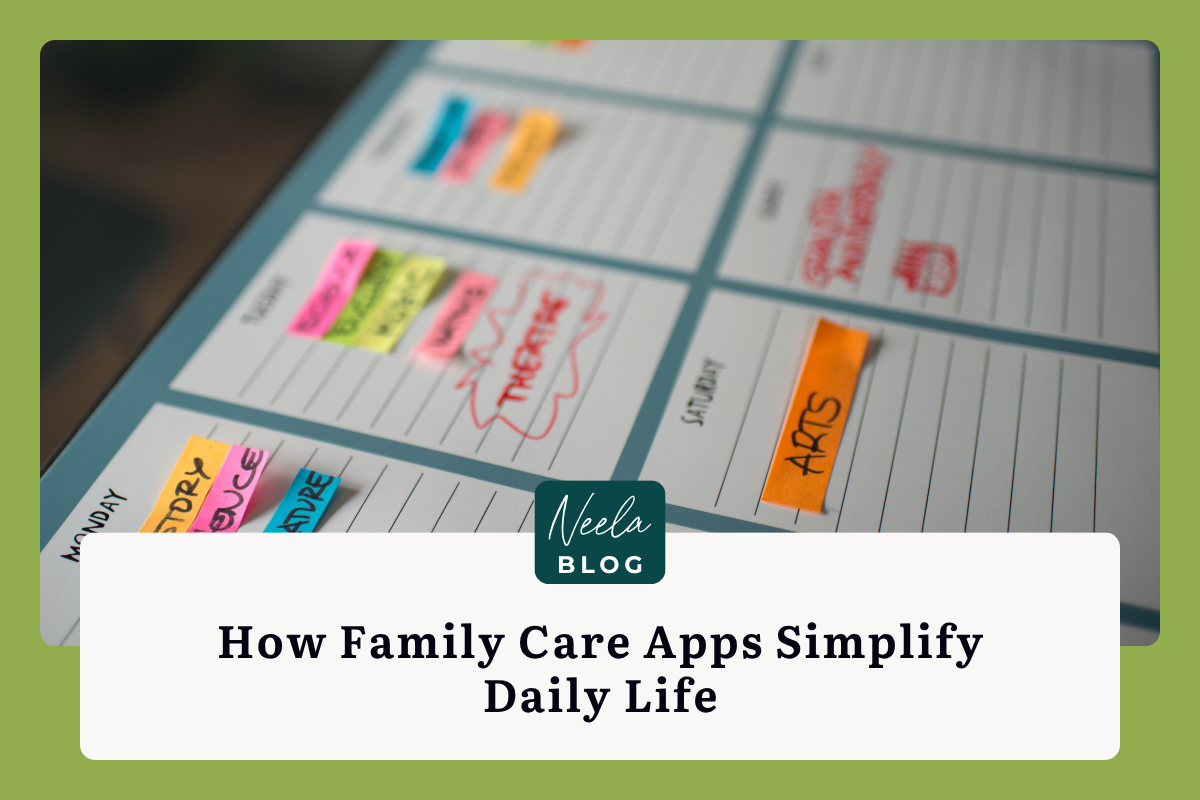
Managing a household with children, aging parents, or both can feel like running a small company without any of the infrastructure. Schedules clash, permission slips vanish, medication reminders slip through the cracks, and somehow you're the only person who knows where anything is. The mental weight of tracking every detail falls disproportionately on one person, usually the primary caregiver, and it's exhausting.
Family care apps address this chaos by creating a single digital hub where everyone can access, update, and coordinate the information that keeps daily life running. These tools aren't about adding more technology to your life; they're about reducing the friction that makes simple tasks feel overwhelming. When your partner can check the shared calendar instead of texting you, when your teenager can see their own responsibilities without being reminded, when medical information is accessible during an emergency, life gets measurably easier.
Families who adopt these systems don't just become more organized. They experience less conflict, fewer missed appointments, and a more equitable distribution of household responsibilities. Understanding how family care apps simplify daily life starts with recognizing the specific problems they solve.
Every household has information scattered across notebooks, refrigerator magnets, text threads, and the memory of whoever happens to be paying attention. A family care app consolidates this chaos into one accessible location.
The family calendar problem isn't just about forgetting events. It's about the constant mental effort of cross-referencing everyone's schedules before making any commitment. Real-time synchronization means that when your spouse adds a work dinner to the calendar, you see it immediately. When soccer practice gets rescheduled, everyone knows.
Color-coding by family member lets you scan a week at a glance and spot conflicts before they become crises. Some apps, like Neela, take this further by connecting appointments with related notes and documents, so you're not just seeing that Mom has a cardiology appointment but also accessing her medication list and previous visit notes in the same view.
Group texts devolve into chaos. Important messages get buried under memes and random updates. Shared inbox features within family apps create dedicated spaces for household communication that stay organized and searchable.
Instead of scrolling through 47 messages to find the plumber's phone number, you can search the family inbox. Instead of wondering if your teenager saw your message about dinner plans, you can check whether they've viewed it. This small shift transforms communication from a source of frustration into a reliable system.
Household logistics consume hours of invisible labor every week. Someone has to remember that the dog needs flea medication, that the car registration expires next month, that the library books are due Thursday. Task management features make this labor visible and shareable.
The power of a shared to-do list isn't just in the list itself. It's in the accountability it creates. When tasks are assigned to specific family members with due dates, there's no ambiguity about who's responsible. The mental load of tracking and reminding shifts from one person to the system.
Recurring tasks become especially valuable. Set up the reminder to change air filters quarterly once, and you never think about it again. The system handles the remembering while you handle the doing.
Getting multiple people to multiple places at overlapping times requires logistics that would challenge a professional dispatcher. Transportation coordination features let families map out who needs to be where, identify conflicts, and coordinate carpools with other families.
Some apps integrate with navigation tools to provide realistic time estimates, helping you recognize when a schedule simply won't work before you're stuck in traffic with a crying child who's already late for their recital.
Running a household involves constant resource management: food, money, supplies, time. Family care apps bring visibility to these resources and help families make better decisions about how to use them.
The question "what's for dinner?" causes more daily stress than it should. Meal planning features connected to smart grocery lists eliminate the decision fatigue and last-minute scrambles. Plan your week's meals on Sunday, generate a shopping list automatically, and check items off as family members notice things running low.
This isn't about perfection. It's about having a starting point. Even if you deviate from the plan, you've got ingredients in the house and options available.
Money conversations cause conflict in many households, often because expenses feel invisible until they become problems. Shared expense tracking makes spending visible to everyone who needs to see it.
When your teenager can see how much the family has budgeted for entertainment this month, they understand why you're suggesting a movie night at home instead of the theater. When both partners can see household spending in real time, there are fewer surprises and fewer arguments.
Emergencies don't announce themselves. When you need your child's insurance card at the urgent care clinic or your mother's medication list during a hospital admission, you need it immediately. Digital vaults solve this problem.
Neela excels at this type of information management, turning scattered documents into an organized, searchable system. Store insurance cards, immunization records, medication lists, and emergency contacts in one secure location accessible from any device.
A first step worth taking today: photograph the front and back of every family member's insurance card and upload them to your family app. This ten-minute task will save you significant stress during your next medical visit.
Include soft details alongside the medical information: your father's preferred pharmacy, the fact that your daughter is terrified of needles and responds well to distraction, the name of your son's pediatrician's nurse who always gets him to cooperate.
School information arrives in a flood at the beginning of each year and trickles in throughout: bell schedules, teacher contact information, early release days, field trip permission forms, sports schedules, music lesson times. Capturing this information in one place means you can actually find it when needed.
Create a dedicated section for each child containing their current schedule, teacher names and emails, and important dates. Update it once at the start of each semester, and you'll spend the rest of the year grateful you did.
The mental load, that constant background hum of things to remember, coordinate, and anticipate, falls disproportionately on primary caregivers. Family care apps can't eliminate this load entirely, but they can distribute it more fairly.
Reminders work best when they're proactive rather than reactive. Instead of remembering to remind your spouse about the parent-teacher conference, set up a notification that goes directly to them. Instead of tracking prescription refill dates in your head, let the app alert everyone when it's time to reorder.
The goal is transferring the remembering from your brain to the system. Your brain has better things to do.
When responsibilities are visible and tracked, accountability follows naturally. Family members can see not just their own tasks but the overall household workload. This visibility often prompts family members to take on more without being asked.
Children especially benefit from seeing their contributions as part of a larger system. They're not just doing chores because a parent said so; they're contributing to a household that depends on everyone's participation.
Families who commit to using care coordination tools consistently report benefits that compound over time. The initial setup requires effort, but that investment pays dividends for years.
Patterns become visible when information is tracked systematically. You might notice that behavioral issues spike when sleep schedules are disrupted, or that certain activities consistently cause scheduling conflicts. These insights lead to better decisions.
The real transformation isn't about efficiency, though that matters. It's about relationships. When one person isn't shouldering the entire mental load, there's less resentment. When communication is clear, there are fewer conflicts. When everyone knows what's expected, there's more harmony.
A good enough system that your family actually uses beats a perfect system that sits unused. Start with one feature, maybe the shared calendar or the medical vault, and build from there. The goal isn't to become a perfectly optimized household. The goal is to spend less time managing logistics and more time actually enjoying your family.
Complete the form to receive notifications when new blogs are posted. You will only receive an email once a month!
Learn how to choose and download the right caregiver app for your family to streamline medication tracking, sync appointments, and coordinate care...
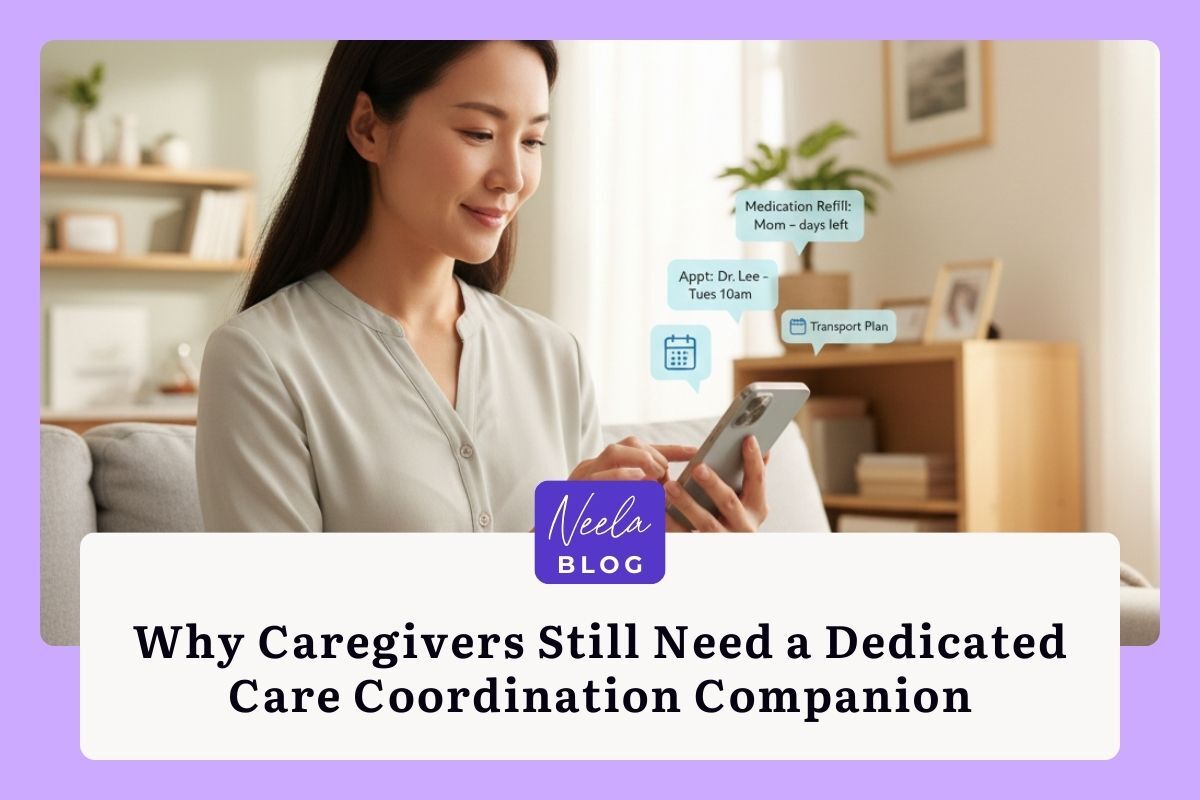
Caregivers need more than AI answers; they need tools like Neela for comprehensive care coordination and support over time.
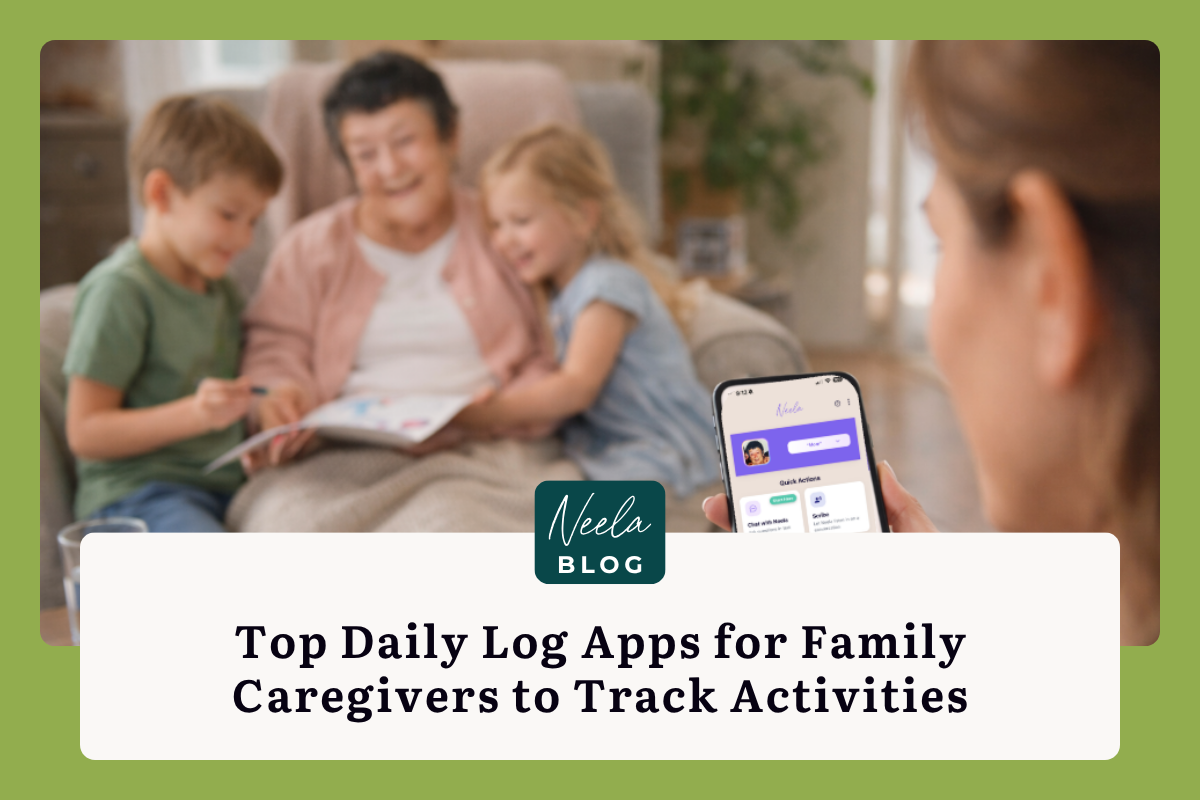
Discover top daily log apps for family caregivers to effectively track health and activities, easing stress and enhancing care for loved ones.