1 min read
Neela vs CaringBridge: Which Is Right for Your Family?
Quick Verdict Neela and CaringBridge solve different problems. If you're a family caregiver managing the daily details of a loved one's care...
6 min read
Alexis Villazon : June 17, 2026
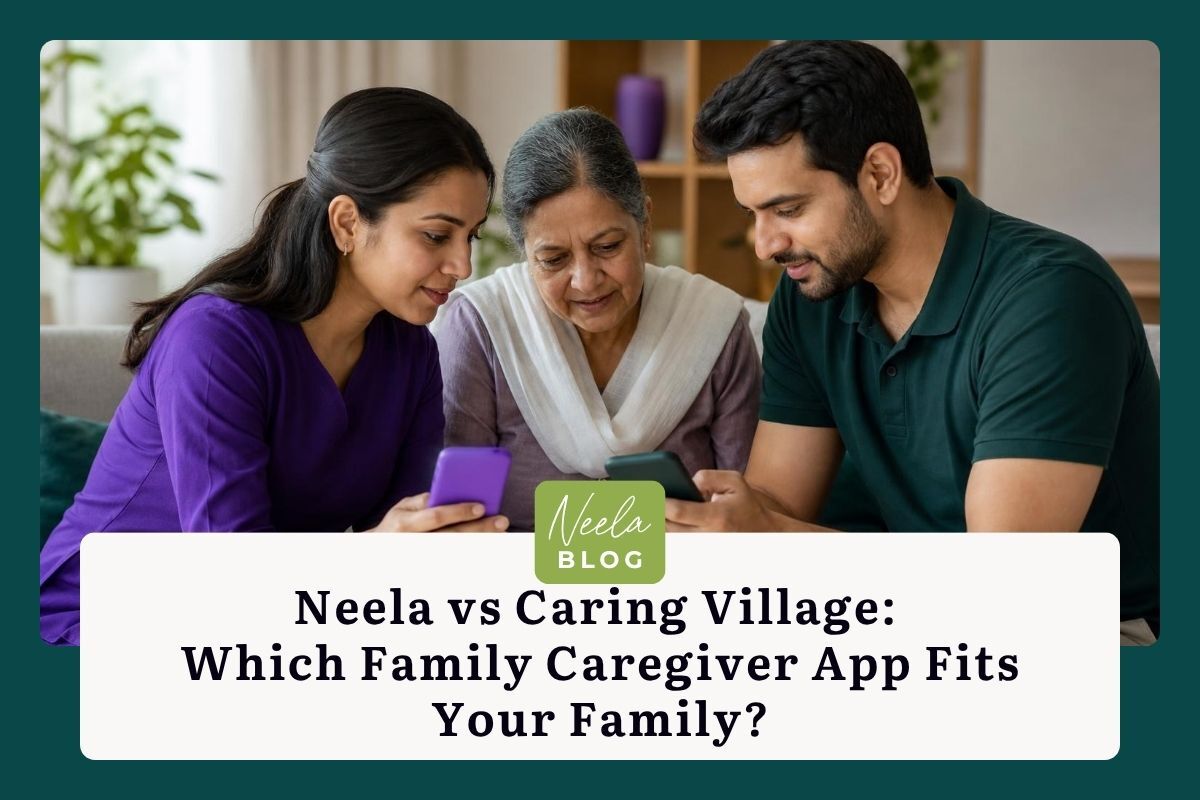
Caring for someone you love is meaningful work, and the tools you use to stay organized shouldn't add to the weight. If you're coordinating appointments, medications, and updates across siblings or other family members, you already know how much there is to hold in your head. The right family caregiver app can carry those details for you, so you can spend less energy tracking and more energy being present.
Two platforms come up often in caregiver conversations: Neela and Caring Village. Both aim to make family caregiving more organized and less stressful, and both do it well. They simply start from different places, and the better fit depends on how your family actually communicates and makes decisions day to day. This comparison walks through features, health tracking, ease of use, and pricing so you can choose with confidence.
Family caregiving has changed. Many caregivers today are coordinating across distance, working around different schedules, and keeping up with medical routines that grow more involved over time. Group texts and paper calendars were never built for this, and most families look for something better once the details start slipping.
Caring Village began as a care coordination platform, built to connect family members, professional caregivers, and local service providers in one shared space. Its roots are in community-based caregiving, and it has earned a solid reputation for helping families communicate and divide up tasks. More recently it has added an AI assistant, called Julia, along with expanded tools for documents and scheduling. At its core, though, Caring Village is still organized around shared coordination: a common space where everyone in the circle can see the calendar, post updates, and check off tasks.
Neela starts from a different place. Instead of organizing care as a running list of tasks and messages, Neela connects appointments, notes, documents, and conversations into one continuous record. It can record and summarize a doctor's visit, keep health records and paperwork in one place, and answer questions about your loved one's care. When something changes, the related pieces stay linked, so the picture of care stays whole instead of scattering across separate screens.
Both apps use AI today. The real difference is the foundation underneath it. Caring Village is built around a coordination board that a team works from together. Neela is built around a connected, searchable care record that the whole family can pick up from at any time.
Any caregiver app lives or dies by how it handles daily logistics, and both apps cover the basics well.
Caring Village offers a clean shared calendar where family members can add appointments, assign tasks, and check off completed items. You can set up recurring tasks like grocery runs or weekly therapy visits, and family members get notified when something is assigned to them. For families who mainly need a clear visual of who's doing what, this works nicely.
Neela connects tasks to the wider context of care. When you log a doctor's appointment, Neela can link it to related medication changes, follow-up notes, and relevant documents. The person covering Tuesday's appointment sees more than the time and location. They also see the questions the primary caregiver wanted to ask and the medication list that needs updating. That connected context is what turns a basic handoff into a smooth one.
A simple first step: before choosing either app, list the five tasks your family finds hardest to coordinate. If they're simple and repetitive, either app will help. If they involve layered medical information and several decision-makers, Neela's connected approach tends to save more time.
Important updates have a way of getting lost in busy group texts, and the one family member who muted the thread can miss something that matters.
Caring Village keeps care conversations in one place with built-in messaging. Family members can post updates, share photos, and comment on tasks, all separate from personal texts. It's a familiar, approachable way to stay in touch.
Neela ties updates to the care events, documents, or tasks they relate to. When you note a medication change, it lives alongside that medication's history rather than scrolling away in a feed. Six months later, when a new doctor asks when a dosage changed, you can find the answer in seconds instead of searching through old messages.
If one person handles most of the caregiving and others check in now and then, Neela's contextual approach helps prevent the "I didn't see that" gap. If your family mainly wants a shared space to stay connected around care, Caring Village's familiar format may feel more natural.
Medication management is one of the highest-stakes parts of caregiving. Adults over 65 take an average of four to five prescription medications, and many take more, so keeping track of what each one does, when refills are due, and which doctor to call is real work.
Caring Village lets you keep a list of current and past medications and share it with your care team, which covers the fundamentals well for straightforward routines.
Neela treats medications as an ongoing, connected record. You can note each drug's purpose, dosage, prescribing doctor, and refill dates, and Neela links new prescriptions or dosage changes to the related appointment notes and contacts. When several specialists are involved, which is common, that connected record makes it easier to spot gaps in communication between providers.
A small, useful first step: create one document listing every current medication, its purpose in plain language, and the prescribing doctor's phone number. Wherever you keep it, having it in one place helps prevent errors during transitions between care settings.
Every caregiver eventually needs a document right now and can't find it. Insurance cards, advance directives, referral letters, and discharge summaries tend to scatter across drawers, inboxes, and patient portals.
Here's a meaningful difference. On Caring Village, document storage (document folders) is part of the paid plans, not the free tier, so a family using the free version can't store paperwork in the app. Customizable care plans are also paid-only. If keeping records together is a priority, factor that into which plan you'd need.
Neela connects documents to the rest of your care timeline. An advance directive isn't just filed away. It's linked to the relevant contacts, the date it was last reviewed, and any conversations your family has had about care preferences. That's especially helpful during a hospital admission, when you need to share a complete picture quickly.
One tip regardless of app: keep a physical emergency binder too, with laminated summary sheets, copies of insurance cards, and the advance directive somewhere easy to grab. Digital storage is essential, and a grab-and-go binder is a comfort when the internet won't cooperate.
The best app is only useful if everyone in your family can actually use it, which matters when your circle spans different generations and comfort levels with technology.
Caring Village has a clean, approachable interface, and most family members can start posting updates and checking the calendar within minutes of signing up. That low barrier to entry is a genuine strength.
Neela is organized around the care timeline, which takes a little more orientation up front and pays off as the care situation grows. Because the features connect, you spend less time hunting for information once you've used it for a few weeks. For occasional family members, the contextual layout makes it easier to catch up quickly, since updates are grouped by what they relate to rather than by when they were posted.
Caring Village offers a free tier plus two paid plans. The free plan covers the basics (shared calendar, messaging, to-do lists) and is a low-risk way to try the app, though it's limited to one village with up to two members and is ad-supported, so a full care circle will usually need to upgrade. The paid plans are Circle at $14.99 per month (up to 2 villages, 5 members each) and Village at $24.99 per month (up to 5 villages, 50 members each). Upgrading removes ads and unlocks external calendar integration, customizable care plans, document folders, and more storage.
Neela keeps its pricing simple. The Care Family plan is $12 per month or $120 per year and covers up to four people. The Unlimited plan is $24 per month or $240 per year for an unlimited number of people. For context, the average family caregiver in the U.S. spends about $7,200 a year out of pocket on caregiving, according to AARP, so a monthly subscription for a tool that reduces errors, saves time, and prevents duplicated effort is a small share of that.
If cost is a concern, it's worth contacting your local Area Agency on Aging or checking your state's Medicaid waiver options. Many states cover assistive technology and equipment through home and community-based waivers. That coverage rarely extends to app subscriptions, but a quick call can tell you what support is available in your area.
It's tempting to wait until things feel complicated before setting up a system. Most families do. But caregiving rarely stays the same for long, and the tool you choose early shapes how smooth the next stage feels.
This is where Neela is different. Neela gets to know your loved one's care as you use it, building a connected record from the appointments, notes, and documents you add along the way. The earlier you start, the more Neela has to work from when life gets busier. A tool you set up today quietly becomes more useful month after month, instead of starting from scratch the day you finally need it.
There's also a difference in how much the app asks of you. A shared coordination board is only as current as what everyone remembers to type in, which is one more thing to keep up with on an already full plate. Neela works the other way around. It pulls the pieces together as care happens, so the record builds in the background and you spend less time maintaining an app and more time with your loved one.
Complete the form to receive notifications when new blogs are posted. You will only receive an email once a month!

1 min read
Quick Verdict Neela and CaringBridge solve different problems. If you're a family caregiver managing the daily details of a loved one's care...
1 min read
Keeping track of a loved one's daily care can feel like trying to hold water in your hands. Between medications, meals, doctor's appointments, and...
1 min read
Managing a household with children, aging parents, or both can feel like running a small company without any of the infrastructure. Schedules clash,...