Top Daily Log Apps for Family Caregivers to Track Activities
Discover top daily log apps for family caregivers to effectively track health and activities, easing stress and enhancing care for loved ones.
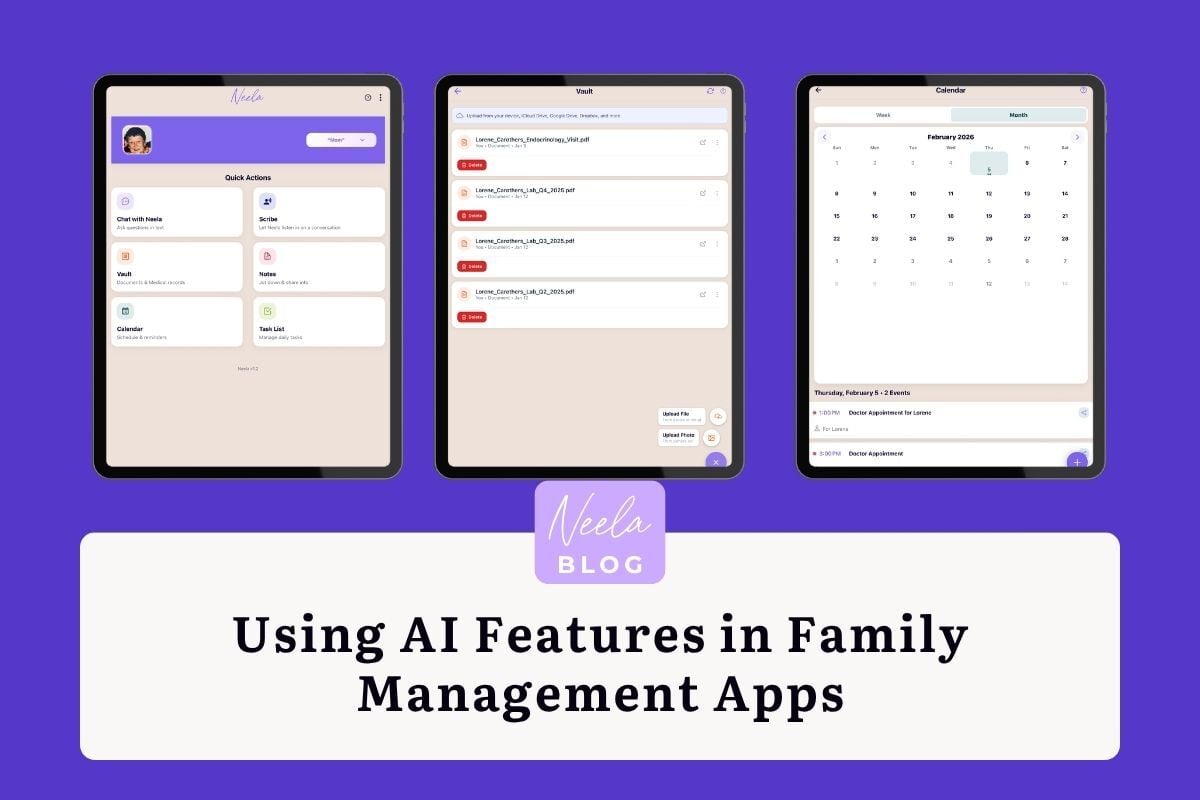
Family life runs on a thousand small decisions: who picks up the kids, what's for dinner, when the dentist appointment is, whether there's enough milk for tomorrow's breakfast. For years, managing this chaos meant sticky notes on the fridge, shared paper calendars, and a lot of mental gymnastics. But something has shifted. AI features in family management apps are quietly transforming how households coordinate, communicate, and care for one another. These tools aren't about replacing the human heart of family life. They're about freeing up your mental energy so you can actually be present with the people you love. If you've felt like you're drowning in logistics, you're not alone, and the good news is that smart technology can genuinely help. Families who embrace these AI-powered tools don't just get more organized. They get more time back. They argue less about who forgot what. They feel less overwhelmed by the daily grind. Whether you're coordinating care for aging parents, juggling multiple kids' activities, or simply trying to keep your household running smoothly, understanding how to use AI features in family management apps can make a real difference.
Remember when organizing family schedules meant manually entering every single event, appointment, and reminder? That era is fading fast. Modern family apps now pull information from emails, text messages, and connected calendars automatically. When your pediatrician's office sends a confirmation email, the app recognizes it and adds the appointment to your shared family calendar without you lifting a finger.
This shift matters because manual entry creates friction. Friction leads to forgotten inputs, which leads to missed appointments and family stress. Platforms like Neela take this further by connecting appointments, notes, and documents into one continuous view, so caregivers aren't constantly re-entering the same information across different systems.
AI doesn't just record your schedule. It learns from it. After a few months of use, smart family apps start predicting what you'll need. They notice that soccer practice happens every Tuesday at 4 PM and that you usually need a reminder 90 minutes before to account for traffic and snack preparation.
Predictive reminders feel almost magical when they work well. Instead of generic alerts, you get contextual nudges: "Traffic is heavy on the route to practice today. Leave 15 minutes earlier than usual." This kind of intelligence turns a simple calendar into an actual assistant that understands your family's rhythms.
Every family knows the frustration of double-booked evenings. One parent commits to a work dinner while the other schedules a parent-teacher conference, and suddenly nobody can pick up the kids from swim lessons. AI-powered calendar syncing catches these conflicts before they become crises.
The best family management tools analyze everyone's schedules simultaneously and flag problems in real time. Some even suggest solutions: "Both parents are busy Thursday at 6 PM. Would grandma be available for pickup?" This proactive approach transforms scheduling from a reactive scramble into a coordinated system.
Here's a feature that sounds simple but changes everything: automatic travel time calculations. When you add an event, the app checks your location, calculates realistic drive times based on current traffic patterns, and builds in appropriate buffers. No more optimistic assumptions that you can get across town in ten minutes during rush hour.
For families managing complex care situations, this becomes essential. Neela helps caregivers track patterns and appointments across multiple family members, making it easier to see when schedules are realistically achievable versus hopelessly overloaded. A good enough schedule that actually works beats a perfect plan that falls apart.
Meal planning might be the most underrated source of family stress. The daily question of "what's for dinner?" consumes more mental energy than it should. AI-powered meal planning tools analyze what's already in your pantry, consider nutritional balance across the week, and generate shopping lists that minimize waste and maximize variety.
Some apps connect to smart refrigerators or allow manual inventory tracking. They learn that your family goes through two gallons of milk weekly and add it to the list automatically when supplies run low. The result is fewer emergency grocery runs and less food rotting in the back of the fridge.
Families with picky eaters, food allergies, or specific dietary requirements face extra meal planning challenges. AI recommendation engines filter recipes based on your family's actual preferences and restrictions. They remember that your daughter won't eat anything with visible onions and that your spouse is avoiding gluten.
Over time, these systems get smarter. They notice which suggested meals actually get made and which get skipped. They learn that your family prefers 30-minute recipes on weeknights but enjoys more elaborate cooking on weekends. This personalization turns generic recipe databases into genuinely useful meal planning partners.
For parents of teenagers or caregivers of adults with cognitive challenges, location awareness provides peace of mind. Geofencing creates virtual boundaries around important locations: home, school, grandma's house, the neighborhood. When family members enter or leave these zones, the app sends quiet notifications.
This isn't about surveillance or control. It's about reducing anxiety. Instead of texting "are you home yet?" every afternoon, parents can glance at the app and see that everyone arrived safely. For families caring for loved ones with dementia, this technology can be genuinely life-saving, alerting caregivers immediately if someone wanders beyond safe boundaries.
Managing children's screen time feels like a constant battle in most households. AI-powered monitoring tools help by tracking usage patterns and enforcing agreed-upon limits automatically. But the best tools go beyond simple timers.
Smart screen time features analyze what kids are actually doing on their devices. They distinguish between educational content and mindless scrolling. They identify concerning patterns, like sudden increases in social media use or late-night activity, and alert parents to potential issues. The goal isn't to spy on children but to create healthy digital habits through consistent, automated boundaries.
Family finances get complicated fast. Between groceries, utilities, kids' activities, medical expenses, and everything else, tracking where money goes requires constant attention. AI-powered expense tracking categorizes spending automatically, learning over time that the $47 charge at the sporting goods store was for soccer equipment, not general retail.
These tools make it easier to spot patterns and have productive conversations about family spending. When you can see that childcare costs $1,200 monthly and extracurricular activities add another $400, budget discussions become grounded in reality rather than vague impressions. For families managing care expenses, platforms like Neela help organize financial documents alongside medical records, creating a complete picture of care-related costs.
Here's the uncomfortable truth: AI features require data to function. The more information these apps collect about your family, the more useful they become, but also the more vulnerable that data becomes. Children's data deserves special protection because kids can't consent meaningfully to data collection, and information gathered now could affect them for decades.
Look for apps that minimize data collection, store information locally when possible, and provide clear explanations of what data goes to external servers. Check whether the app sells data to third parties or uses it for advertising. The most trustworthy family apps treat your family's information as genuinely confidential.
When evaluating family management apps, start with these questions: Does the company have a clear privacy policy written in plain language? Can you delete your data completely if you leave the platform? Is data encrypted both in storage and during transmission? Does the app require strong authentication?
Avoid apps that request permissions they don't need. A meal planning app doesn't need access to your contacts. A calendar app doesn't need your location history. Be especially cautious with free apps, since if you're not paying for the product, your data might be the product. Spending $5-10 monthly on a reputable family management platform is worthwhile insurance for your family's privacy.
The promise of AI in family management isn't about automating love or outsourcing parenting. It's about handling the logistics so you can focus on what matters. When the app remembers the dentist appointment, you can remember to ask your kid about their day. When the grocery list builds itself, you can actually enjoy cooking together.
Start small. Pick one area where your family struggles most, whether that's scheduling conflicts, meal planning, or expense tracking, and try an AI-powered solution for that specific problem. Give it a few weeks to learn your patterns before judging its usefulness. And remember: good enough organization that actually happens beats perfect systems that collapse under their own weight.
Your first step? Tonight, identify the single biggest source of household logistics stress. That's where AI can help most. You don't need to transform everything at once. Just start somewhere, and let the technology earn your trust one solved problem at a time.
Complete the form to receive notifications when new blogs are posted. You will only receive an email once a month!
Discover top daily log apps for family caregivers to effectively track health and activities, easing stress and enhancing care for loved ones.
Compare features and coordination tools to see whether Neela vs. Caring Village is the better family caregiver app for managing your daily medical...
Discover how family care apps streamline daily life by centralizing communication, coordinating schedules, and reducing the mental load on caregivers.