National Family Caregiver Support Program (NFCSP) Guide
Discover support for family caregivers through the National Family Caregiver Support Program, including services, eligibility, and how to access...
6 min read
Alexis Villazon : Published

Your sister handles every one of your mom's appointments. Your neighbor has been driving his wife to dialysis three times a week since spring. You've told them both, more than once, to "let me know if you need anything." Nothing has come of it, and you're starting to wonder what you're missing.
The gap usually has nothing to do with willingness. It's about how help gets offered. This month gives you a perfect reason to change that.
National Family Caregivers Month has been observed every November since 1994. It's led by the Caregiver Action Network, and each year the president issues a proclamation recognizing the people who provide unpaid care for their parents, spouses, children, and friends. The 2026 theme is "Care Connects Us", and the Administration for Community Living joins the observance alongside nonprofits across the country.
That recognition matters, and the numbers behind it are big. The Caregiver Action Network's 2026 materials note that roughly 78% of caregivers say they need more help finding information about services. Many of the people doing this work see it simply as "helping Mom" or "taking care of my husband."
A card or a social media post is a kind gesture. Still, the best way to mark November is to take one tangible task off a caregiver's plate, and then keep it there. A proclamation honors caregivers. A finished errand gives them back an afternoon.
If you're a sibling, adult child, grandchild, spouse, neighbor, or friend who wants to help, this guide is for you. Everything below is specific enough to start this week.
This phrase comes from a good place. You don't want to overstep, and you trust the caregiver to know what's needed. The trouble is what happens on the other end.
When you ask a family caregiver to tell you what to do, you're handing them a new job. Now they have to:
For someone already tracking medications, appointments, insurance calls, and a full household, that's real mental work. Much of a caregiver's load is informational: holding every date, dose, and phone number in their head. Delegating adds to that load before it lightens it. So most caregivers do the simplest thing and handle it themselves.
The fix is to make the decision for them. Offer something with a date on it. "Let me know if you need anything" sends the work back. "I'll bring dinner Thursday" doesn't.
Specific offers are easy to say yes to. They also show you've been paying attention to what their week actually looks like. If you want a deeper look at this from the caregiver's side, Neela's guide How to Delegate Caregiving Tasks: A Guide for Family Caregivers is worth passing along.
Your first step: think of one thing you could offer with a day and time attached, and send that text today.
The ideas below range from an hour a week to ongoing ownership of a whole category of work. Pick one that fits your schedule and your strengths. One task done reliably beats five done once.
Choose a recurring task and own it completely. That might be the weekly pharmacy run, the Tuesday drive to physical therapy, or setting up and managing grocery delivery. "Own it" means the caregiver stops thinking about it entirely. You track the refill date, you notice when the order is running low, you handle the mix-up when the pharmacy is out of stock.
Medical appointments are another high-value handoff. Offer to take one appointment from start to finish:
A tool like Neela's Scribe can help here. She records the appointment to create a transcript and a clear summary (the audio itself is never saved), so the primary caregiver gets the full picture without having been in the room.
Paperwork piles up quietly and drains time. Ask the caregiver for one paperwork thread you can take over, then see it through:
Then take on what you might call the information lift. Learn what medications your parent takes and why. Know who the doctors are and what each one handles. Understand the care plan. Right now, the primary caregiver may be the only person who knows any of this, and that's a fragile setup for everyone. When you can answer "what's this pill for?" or "who's her cardiologist?" without calling them, you've shared a load that's hard to see from the outside.
A single weekend away is lovely. A respite block they can count on is better. Offer a set afternoon every other week, or one weekend a month, and put it on the calendar. Consistency lets the caregiver plan their own life around it: a standing doctor's appointment of their own, a class, coffee with a friend.
Food works the same way. Show up with dinner instead of asking what they'd like. Fill the fridge with things that are easy to heat. Drop off breakfast items on Sunday. Asking "what do you want?" creates another decision, while a container of soup on the counter simply helps.
For more ideas on structuring breaks, Respite for Caregivers: How to Take a Break Without Compromising Care is a helpful read to share.
Living far away doesn't take you out of the picture. Plenty of the work can be done from anywhere:
If you're the sibling who lives far away, Long-Distance Caregiving: How to Stay In the Loop When You Can't Be There has practical setups. If you're the one who lives nearby, When You're the Only Sibling Who Lives Nearby is written for you.
Whatever you take on, check in on the caregiver as a person. Ask how they slept, what they're reading, how their own health is. Most conversations they have this month will be about your loved one. Yours can be about them.
Even well-meant help can create friction. A few patterns to steer clear of:
Your first step here: if you've offered help before and let it drop, say so plainly and name the specific thing you'll do now. Caregivers tend to appreciate honesty and a fresh start.
The single most useful thing you can do this month is ask to be added to their care network. Once you can see what's coming up, you can claim tasks without the caregiver having to ask. That shift changes everything about how help flows through a family.
This is where Neela comes in. Neela is an AI caregiving app built for family caregivers, and she brings appointments, notes, documents, medications, providers, and tasks into one shared view. The caregiver can invite family members and helpers, each with their own access level. Everyone sees the same calendar and task list, so information moves from scattered group texts and memory into clear guidance.
Here's what that looks like in practice. You open the shared calendar, see the Thursday cardiology appointment, and claim it. You check the medication list before a pharmacy run. You ask Neela a question about the care plan and get an answer drawn from the family's own information, instead of texting the caregiver. Important records stay in Vault, Neela's secure, HIPAA-compliant document storage, so you can find the insurance card when you need it.
Neela's guides How to Build a Reliable Care Network and How to Share Caregiving Duties With Your Siblings can help your family set this up together.
National Family Caregivers Month is a good moment to start, and it doesn't have to end on November 30. Send one specific offer this week. Ask the caregiver in your life to add you to their care network on Neela. Once you're in, "let me know if you need anything" becomes "I've got Thursday," and that's the kind of help they can actually use.
Complete the form to receive notifications when new blogs are posted. You will only receive an email once a month!

Discover support for family caregivers through the National Family Caregiver Support Program, including services, eligibility, and how to access...
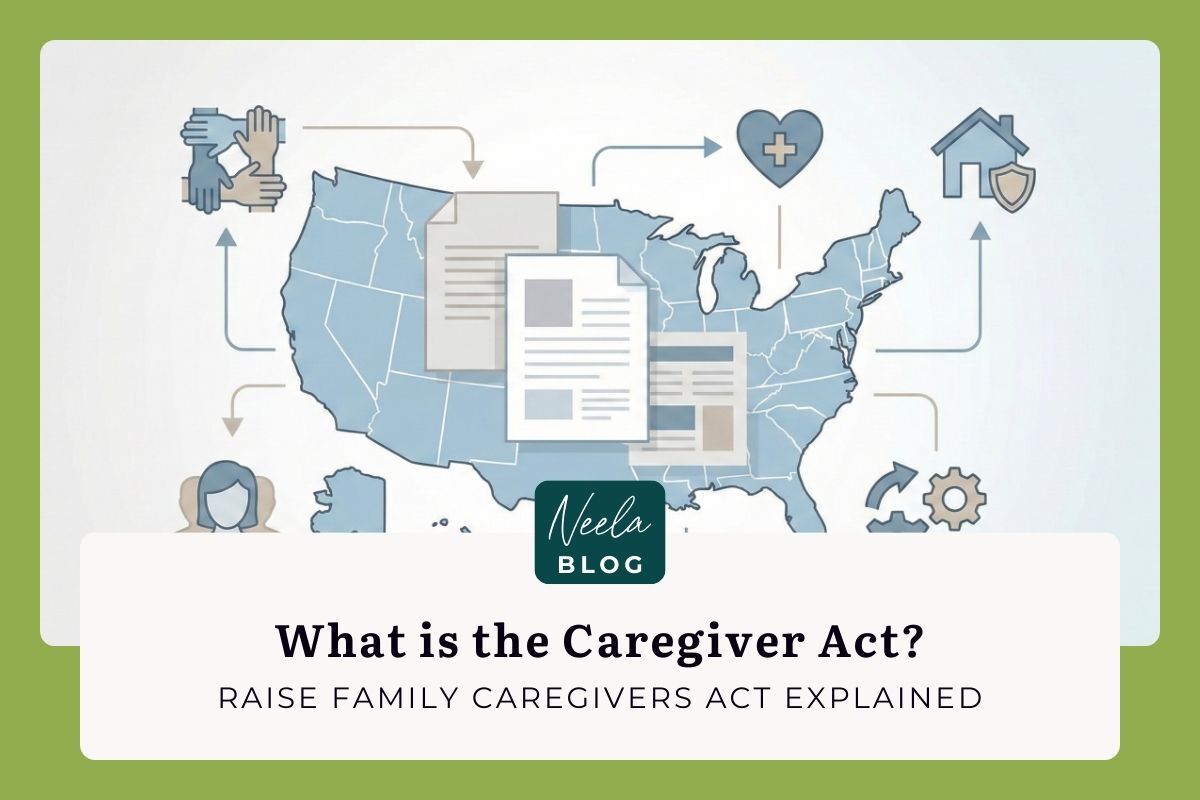
Learn about the RAISE Family Caregivers Act, a federal law designed to support and recognize unpaid family caregivers through coordinated national...
Family caregivers struggle with medical information apps because those apps are built for one patient or a clinician, not a family. Here is why, and...